 Save to Pinterest
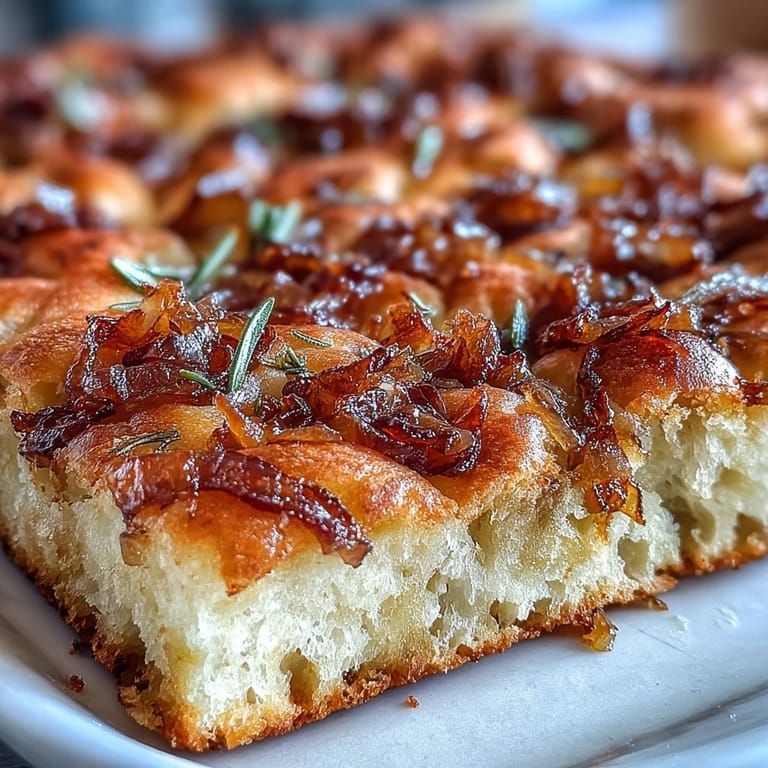
 My neighbor stopped by one afternoon smelling like a fresh bakery, and I finally asked her the secret. She pulled a focaccia from her bag, still warm, studded with caramelized onions that tasted almost like caramel itself. That was the moment I realized focaccia didn't have to be plain or intimidating—it could be something I made myself, using sourdough starter I'd been keeping alive for months. The combination of chewy, airy crumb and that glossy golden top with sweet onions felt like a small victory every time I pulled it from the oven.
I made this for a casual dinner party once, and someone asked if I'd bought it from that Italian place downtown. The look on their face when I said I'd made it myself made all those stretching and folding sessions worth it. My hands had gotten sore, but tearing into that golden, dimpled bread with friends crowded around the counter felt like the whole point of cooking.
Ingredients
- Active sourdough starter (100 g, 100% hydration): This is your leavening agent and flavor powerhouse; it needs to be bubbly and fed at least 4-8 hours before mixing so it's at peak activity.
- Bread flour (400 g): The higher protein content builds structure and creates that signature chewy texture; all-purpose flour works but won't give you quite the same strength.
- Lukewarm water (300 ml): Temperature matters more than you'd think—too cold and fermentation stalls, too hot and you kill your starter, so aim for around 75-80°F (24-27°C).
- Fine sea salt (10 g): Added after autolyse because salt can inhibit gluten development if mixed in too early; it also seasons the dough from within.
- Extra-virgin olive oil (20 ml for dough, plus more for pan and topping): Quality matters here since it's a flavor component, not just a lubricant—a fruity or peppery oil adds character.
- Yellow onions (2 medium, thinly sliced): The sweetness comes from long, slow cooking rather than the onion itself, so patience and medium-low heat are non-negotiable.
- Flaky sea salt (1 tsp for topping): This doesn't dissolve into the dough; it provides bursts of salinity and texture, so don't substitute fine salt here.
- Fresh rosemary (1 tsp, optional): A whisper of herbal note that feels Italian without overpowering; dried works if fresh isn't available, but use half the amount.
Tired of Takeout? 🥡
Get 10 meals you can make faster than delivery arrives. Seriously.
One email. No spam. Unsubscribe anytime.
Instructions
- Mix and rest the dough:
- Combine your active starter, flour, and water in a large bowl, stirring until everything is shaggy and no dry flour remains. This autolyse phase (30 minutes covered) is when gluten begins forming on its own, and you'll notice the dough feels smoother when you return to it.
- Incorporate salt and oil:
- After the rest, add salt and olive oil, mixing until they're fully integrated into the dough. The dough will feel slippery at first, but keep mixing and it will come together again.
- Build strength through folds:
- Over the next 2 hours, perform 3-4 sets of stretch and folds at 30-minute intervals; wet your hand, grab one side of the dough, stretch it up and fold it over the center, then rotate the bowl and repeat from all four sides. This mimics kneading but is gentler and builds beautiful gluten structure that you'll feel becoming elastic under your fingers.
- First rise:
- Cover the bowl and let it bulk ferment at room temperature for 6-8 hours; the dough should roughly double. You'll know it's ready when it jiggles slightly when you gently shake the bowl and holds an indent if you poke it.
- Prepare the pan and shape:
- Oil a 9x13-inch pan generously (this prevents sticking and creates crispy edges), then carefully transfer the dough without deflating it too much. Using oiled fingers, gently stretch and press it to fit the pan—imagine coaxing it rather than forcing it.
- Cold overnight rest:
- Cover the pan and refrigerate for 8-12 hours; this is where magic happens—the cold slows fermentation, deepening sourdough flavor, and the long rest makes the dough easier to dimple without tearing. You can even bake it straight from the fridge if you're short on time, though it's not quite as spectacular.
- Caramelize the onions:
- While dough rests, heat 1 tbsp olive oil in a skillet over medium-low heat and add sliced onions, stirring occasionally for 20-25 minutes until they're golden, jammy, and smell like pure comfort. They should be soft enough to break apart with a wooden spoon; if they're browning too fast, lower the heat.
- Bring dough to room temperature:
- Remove the pan from the fridge about 1 hour before baking and let it sit covered; the dough will relax and rise slightly, becoming easier to dimple and more forgiving to work with.
- Shape and top:
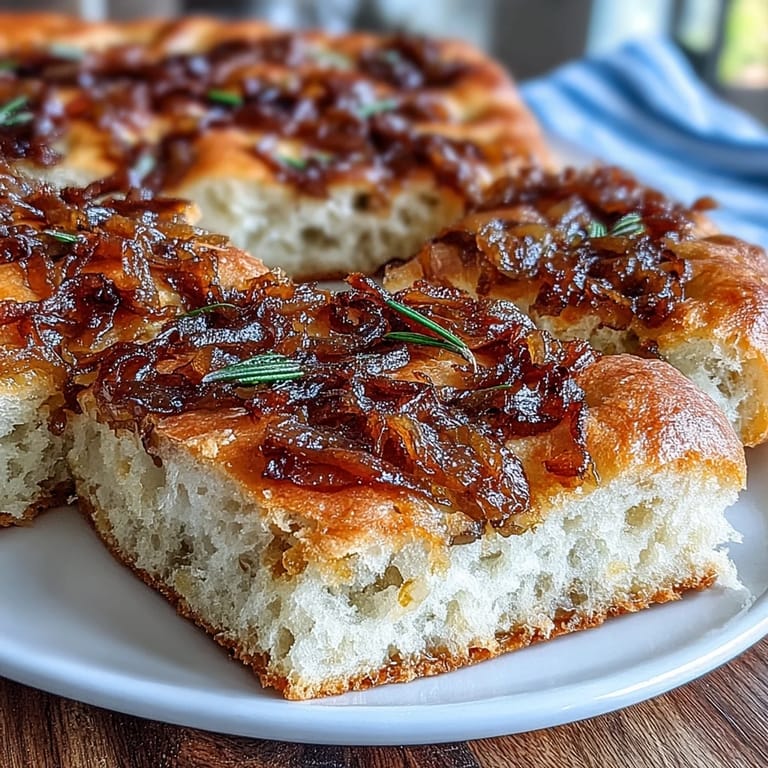
- Preheat your oven to 220°C (425°F), then use your fingertips to create dimples across the entire surface of the dough, being gentle and playful about it. Drizzle with a little more olive oil (this promotes browning and adds richness), scatter the cooled caramelized onions evenly, finish with flaky sea salt, rosemary if using, and a crack of black pepper.
- Bake to golden perfection:
- Bake for 25-30 minutes until the edges are deep golden and crispy and the top is set; the focaccia should sound hollow if you tap the bottom. You'll smell it before it's done—that toasted bread aroma that makes you impatient to eat.
- Rest and serve:
- Let it cool for a few minutes so the structure sets, then tear into it warm with good company.
 Save to Pinterest
 The first time a friend came back for seconds and asked me to make this for their birthday dinner, I realized this wasn't just bread—it was an invitation to sit at a table longer, to tear into something warm together, to feel like you'd made something worth celebrating. That's when focaccia became more than technique in my kitchen; it became a gesture.
Why Overnight Fermentation Transforms Everything
I used to think overnight rising was a convenience hack, but it's actually where sourdough flavor develops. The cold temperatures slow fermentation just enough that the starter's bacteria and wild yeast have time to create complex, subtle flavors that you simply can't rush. The texture changes too—the dough becomes more extensible, easier to work with, and somehow more forgiving when you're shaping it. When you finally pull it from the fridge, you've got something that tastes like it came from a serious bakery, not from cutting corners.
The Alchemy of Caramelized Onions
Most of us cook onions the way we're taught—hot pan, quick browning—and then wonder why restaurant focaccia tastes different. Caramelization is actually a chemical transformation where the onions' natural sugars break down and recombine into hundreds of new flavor compounds, creating sweetness and depth that raw onions could never achieve. The first time I let them cook for the full 25 minutes without rushing, I tasted the difference immediately; they went from sharp and vegetable-like to something almost jammy and luxurious. Now I sometimes caramelize extra just to have on hand for eggs, pasta, or grilled bread—once you understand this technique, you'll use it everywhere.
Shaping and Dimpling Like a Professional
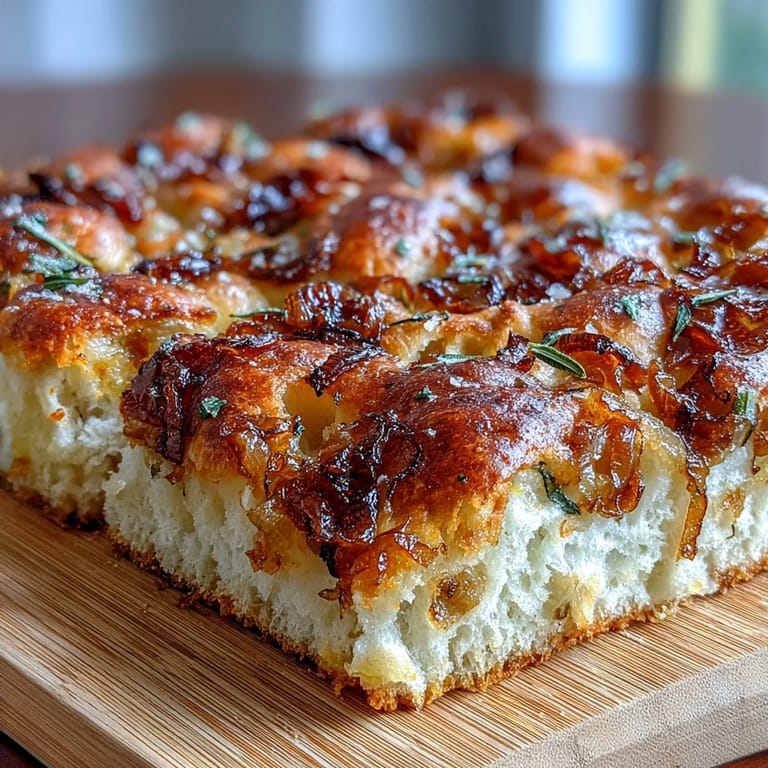
The dimpled surface of focaccia isn't just decorative—those indentations catch olive oil and toppings, creating pockets of flavor and texture that make every bite interesting. I learned the hard way that you need to be confident but gentle; aggressive dimpling can deflate all the air pockets you've spent hours building, while timid dimpling leaves you with flat bread. The trick is letting your fingers sink in slowly, feeling the resistance of the dough, and stopping before you hit bottom.
- Wet or oiled fingertips make dimpling easier and prevent sticking.
- Work across the entire surface evenly so the bread rises consistently in the oven.
- If you tear the dough, pinch it back together—minor tears will seal during the final rise and bake.
 Save to Pinterest
 Making focaccia from a living starter connects you to something ancient and alive—a rhythm of feeding and building that feels more like partnership than recipe-following. Once you've made it once and tasted what patience and good ingredients can create, you'll keep making it.
Recipe FAQ
- → How does the overnight rise affect the focaccia?
The extended refrigerated rest develops deeper flavor through fermentation and improves the dough's texture, resulting in a light, chewy crumb.
- → Can I substitute the sourdough starter with commercial yeast?
While commercial yeast can speed up the process, sourdough starter provides unique tangy flavor and improved texture that yeast alone may not replicate.
- → What is the purpose of dimpling the dough before baking?
Dimpling helps trap olive oil and toppings, preventing large air pockets and ensuring even baking with a moist, flavorful crust.
- → How can I achieve perfectly caramelized onions?
Cook sliced onions slowly over medium-low heat with olive oil for 20-25 minutes, stirring occasionally until golden and sweet.
- → Are there variations to the toppings that work well?
Yes, adding sliced olives or sun-dried tomatoes alongside the onions offers extra flavor and complexity.