 Save to Pinterest
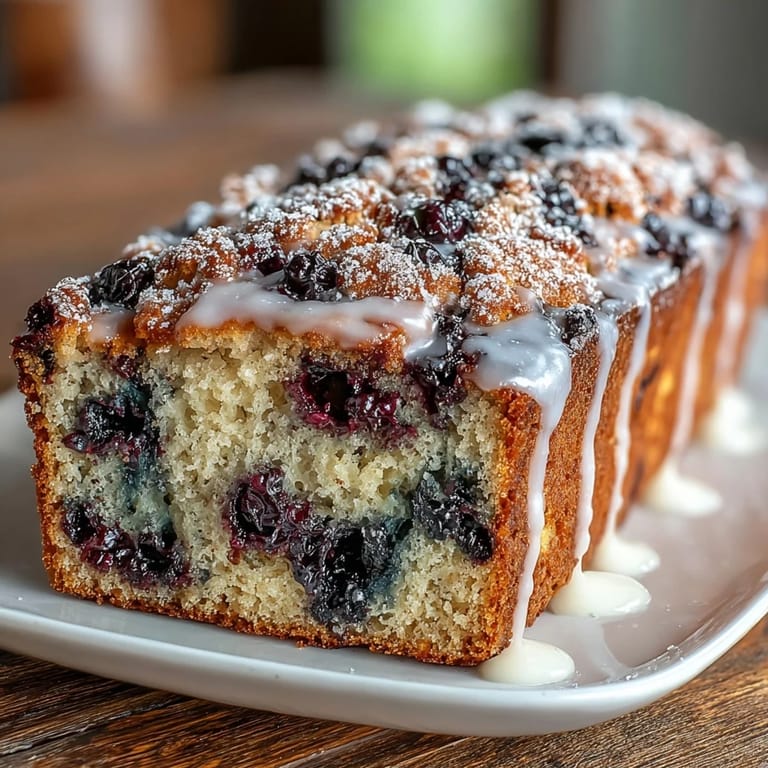
 My sister called me three weeks before her baby shower in a mild panic—she needed something elegant but not fussy to serve alongside champagne and finger sandwiches. I suggested this lemon blueberry loaf, partly because I'd been craving the bright, almost floral quality of fresh lemon zest, and partly because I knew it would look beautiful on a tiered cake stand. The first time I made it, the kitchen filled with this unmistakable aroma that made everyone stop mid-conversation and ask what I was baking. That's when I knew I'd found something special.
I'll never forget watching my neighbor taste a slice at that baby shower—she closed her eyes like she was solving a puzzle, trying to figure out what made it taste so bright. When I told her it was the combination of fresh lemon juice and zest, she immediately asked for the recipe. Now, whenever I make it, I think of how food has this quiet way of creating small moments of joy that people actually remember.
Ingredients
- All-purpose flour (1 ½ cups): The base structure—use good quality flour because it actually makes a difference in how tender the crumb turns out.
- Baking powder and baking soda (1 tsp and ½ tsp): This combination gives you gentle, even rise without any metallic aftertaste that sometimes happens with too much soda.
- Salt (¼ tsp): It sounds small, but it's what keeps the lemon from tasting one-note.
- Unsalted butter (½ cup, softened): Room temperature is non-negotiable here—it creams into the sugar much more smoothly, creating a lighter texture.
- Granulated sugar (1 cup): The sweetness needs to be there to balance the tartness of the lemon, but not so much that it masks it.
- Eggs (2 large, room temperature): Cold eggs won't incorporate properly—pull them out 20 minutes before you start mixing.
- Lemon zest (2 tsp): Use a microplane, not a box grater—you want those delicate shreds, not chunks.
- Fresh lemon juice (⅓ cup): Bottled juice tastes tired and flat; fresh lemons are worth the extra 30 seconds of squeezing.
- Sour cream or yogurt (½ cup): This is what makes the difference between a regular cake and something that feels luxurious.
- Vanilla extract (1 tsp): Pure vanilla only—the imitation kind clashes with the lemon.
- Fresh blueberries (1 cup): Frozen blueberries work beautifully and sometimes even better because the ice crystals keep them from bleeding.
- Powdered sugar for glaze (1 cup, sifted): Sift it because lumps in the glaze are immediately noticeable.
- Lemon juice for glaze (2–3 tbsp): Start with 2 and adjust based on how thick or thin you want it.
Tired of Takeout? 🥡
Get 10 meals you can make faster than delivery arrives. Seriously.
One email. No spam. Unsubscribe anytime.
Instructions
- Prepare your space:
- Preheat the oven to 350°F and line your loaf pan with parchment paper—it sounds fussy but it saves you from broken corners when you're trying to turn it out. This step takes 60 seconds and prevents 10 minutes of frustration.
- Combine the dry ingredients:
- Whisk the flour, baking powder, baking soda, and salt together in a medium bowl until everything is evenly distributed. This prevents pockets of baking soda that can create bitter spots in your loaf.
- Cream butter and sugar:
- Beat them together for 2 to 3 minutes until the mixture looks pale and fluffy—this incorporates air that helps the loaf rise gently. You'll actually see the texture change from grainy to light and pillowy.
- Add the eggs slowly:
- Add one egg, beat until it disappears into the mixture, then add the second one and repeat. If you dump both in at once, they sit on top like little islands and won't incorporate smoothly.
- Mix in the bright flavors:
- Add the lemon zest, lemon juice, sour cream, and vanilla all together, stirring until the batter looks completely smooth and uniform. The mixture should be glossy and slightly thick.
- Fold in the dry ingredients:
- Add the flour mixture in two additions, stirring just until you don't see any white streaks—overmixing makes the loaf dense and tough. Stop when it looks just combined.
- Prepare the blueberries:
- Toss them with 1 tablespoon of flour so they're lightly coated, which prevents them from sinking to the bottom and also helps keep them from bleeding. Gently fold them into the batter as the very last step.
- Transfer and smooth:
- Pour the batter into your prepared pan and use a spatula to smooth the top so it bakes evenly. A lumpy top can lead to one side browning faster than the other.
- Bake with patience:
- Bake for 50 to 55 minutes—a toothpick inserted in the center should come out clean with maybe one tiny blueberry clinging to it. If the top is browning too quickly around minute 40, tent it loosely with foil.
- Cool properly:
- Let it rest in the pan for 10 minutes so it firms up enough to handle, then turn it out onto a wire rack to cool completely. A warm loaf will fall apart if you glaze it too soon.
- Make the glaze:
- Whisk the sifted powdered sugar with 2 tablespoons of fresh lemon juice until it's completely smooth, then add more juice a half tablespoon at a time until you get the consistency you want. It should drip slowly, not pour like water.
- Finish with intention:
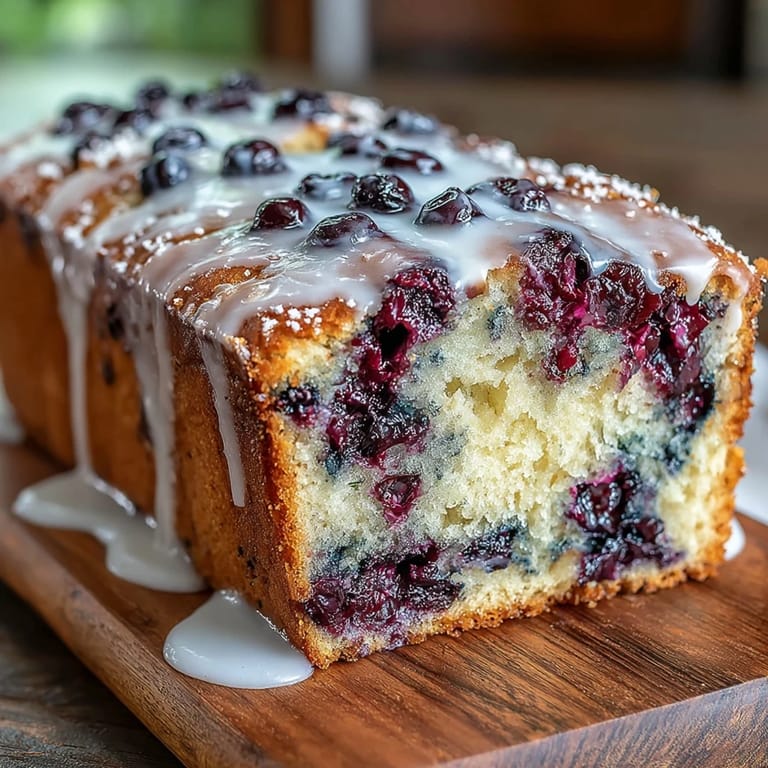
- Drizzle the glaze over the cooled loaf in thin lines, letting gravity do the work, and sprinkle extra lemon zest on top if you want. Let it set for 15 minutes before slicing so the glaze hardens slightly.
 Save to Pinterest
 At my sister's baby shower, I watched a grandmother take a bite, smile quietly, and then eat another slice before anyone else finished their first piece. That's the moment I realized this recipe wasn't just about combining ingredients—it was about creating something that makes people feel cared for. Food that tastes like someone paid attention.
Why Fresh Lemon Makes All the Difference
Lemon is one of those flavors that people either love immediately or they don't understand until they taste it done right. When I started using fresh-squeezed juice instead of bottled, I noticed the loaf tasted brighter, almost floral in a way that made people lean in closer to figure out what they were tasting. Bottled lemon juice has been processed in a way that flattens the complexity—it's still acidic, but it's missing those volatile oils that make fresh lemon sing. The zest is what really matters though; that's where all the aromatic oils live, and a microplane lets you capture them without getting the bitter white pith underneath.
The Secret to Blueberries That Stay Put
One of the most common complaints about blueberry loaves is that the berries sink to the bottom, leaving you with a blueberry-less top and a sad little lump at the base. The trick I discovered is tossing them lightly with flour before folding them in—the flour creates just enough friction that they stay suspended throughout the batter. Frozen blueberries actually work better than fresh for this because they're firmer and less likely to break down in the batter. I've also noticed that adding them as the very last step, after everything else is combined, means they're less likely to be stirred into submission by the time you get them in the pan.
Making This Recipe Your Own
Once you understand how this loaf works, it's actually very forgiving to small adjustments. I've added ¼ teaspoon of lemon extract for extra brightness, and I've swapped Greek yogurt for sour cream when I wanted something tangier. The glaze can be made thicker if you're serving it on a platter and don't want drips, or thinner if you want it to run down the sides in those Instagram-worthy drizzles.
- Earl Grey tea is the perfect pairing: The bergamot in the tea echoes the lemon in the loaf in a way that feels intentional and sophisticated.
- Make it a day ahead: The flavor actually deepens after a day or two, and the crumb firms up slightly so it's easier to slice cleanly.
- Wrap it loosely in plastic wrap: This keeps it moist without trapping steam that can make the top soggy.
 Save to Pinterest
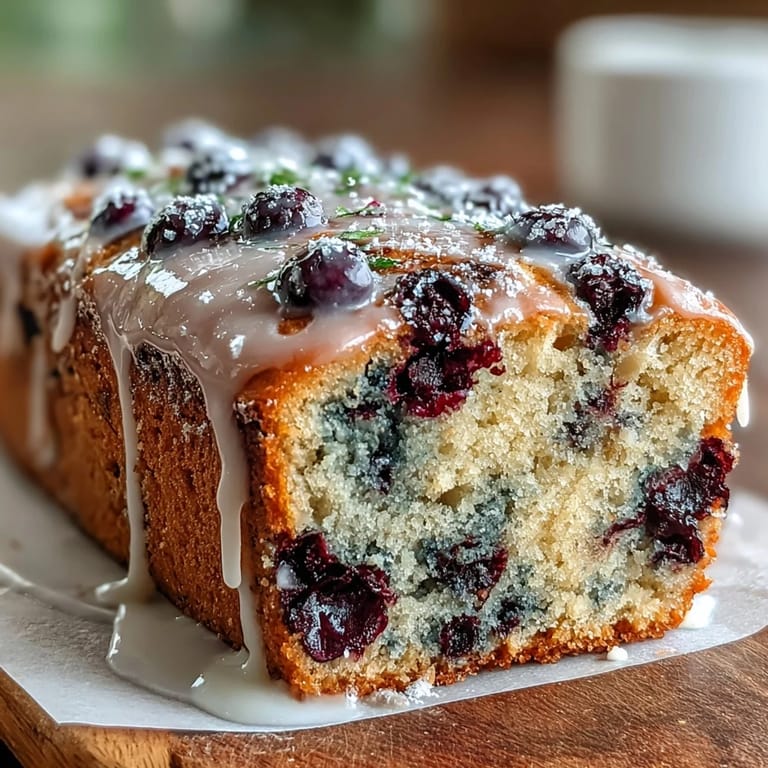
 This loaf has become the thing I make when I want to say something without words—when a friend needs cheering up, when there's a celebration that deserves something homemade, when I want someone to know they matter. It's simple enough to be approachable but special enough to feel like a gift.