 Save to Pinterest
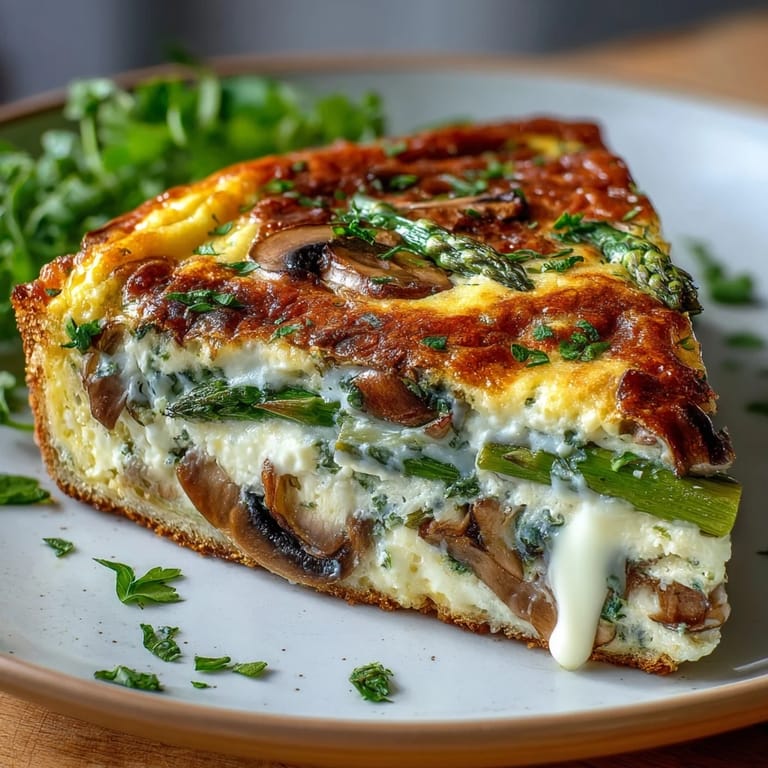
 There's something about standing at the stove on a lazy Sunday morning, watching mushrooms turn golden in a skillet while the smell of toasted sourdough fills your kitchen, that makes you forget you're actually cooking something impressive. I stumbled into this frittata while trying to use up a loaf that was getting a little stale and a bunch of asparagus from the farmers market that I'd been eyeing all week. What started as a practical use-it-up moment turned into something so elegant I found myself making it for guests, pretending it was planned all along.
I made this for my sister's book club gathering last April, and I remember being genuinely nervous about whether the crust would hold up or if the whole thing would be a soggy mess. It came out of the oven looking golden and slightly puffed, and someone actually asked for the recipe before even tasting it, which is when I knew I'd accidentally created something worth keeping in rotation.
Ingredients
- Sourdough bread: Use a loaf that's a day or two old—it holds together better and won't turn mushy when brushed with butter and pre-baked.
- Unsalted butter: This goes into brushing the bread, so it matters that it's melted and distributed evenly for that crispy base.
- Fresh asparagus: Trim the woody ends by snapping them where they naturally break, and cut them into 1-inch pieces so they cook evenly without turning into mush.
- Cremini mushrooms: These have more flavor than button mushrooms, but honestly either works—just slice them fairly thin so they soften quickly.
- Shallot: This is your quiet backbone, adding a gentle sweetness that balances the earthiness of the mushrooms without being aggressive.
- Olive oil: Good quality matters here since it's doing the heavy lifting in the pan—this isn't the place for cooking spray.
- Large eggs: You need 8 to get the right ratio of custard to vegetables and crust, so don't try to skimp.
- Whole milk and heavy cream: The combination gives you richness without being heavy, and the cream helps the eggs set up with a creamy texture instead of getting rubbery.
- Gruyère and Parmesan cheeses: Gruyère melts beautifully and tastes nutty, while Parmesan adds a sharp bite—together they're better than either alone.
- Fresh chives: These add brightness at the end, so don't skip them or substitute with dried, which tastes like nothing.
Tired of Takeout? 🥡
Get 10 meals you can make faster than delivery arrives. Seriously.
One email. No spam. Unsubscribe anytime.
Instructions
- Get your oven ready and prep the pan:
- Heat your oven to 375°F and lightly grease a 9-inch springform pan or deep pie dish—you want it buttered enough that nothing sticks but not so much it's slick. This matters more than you'd think because you'll be cutting into this thing later.
- Build that sourdough foundation:
- Arrange your sourdough slices to line the bottom and sides of the pan, overlapping them slightly like you're tiling a floor—it's okay if there are small gaps because the egg mixture will seep through and bind everything together. Brush generously with melted butter, then pop it in the oven for 8 to 10 minutes until it's just starting to turn crispy and golden.
- Sauté the vegetables until they're tender:
- While the bread toasts, heat olive oil in a skillet over medium heat and cook the chopped shallot for a minute or two until it becomes fragrant and slightly translucent. Add the sliced mushrooms and let them release their moisture and turn soft, about 4 minutes, then toss in the asparagus pieces and cook for 2 to 3 more minutes until everything is tender but still has a little character.
- Whisk together the egg custard:
- In a bowl, crack your 8 eggs and whisk them with the milk and cream until they're well combined, then stir in both cheeses, the fresh chives, salt, and pepper—you want everything evenly distributed so every slice gets all the good stuff.
- Bring it all together in the pan:
- Once your sourdough crust comes out of the oven, spread the sautéed vegetables evenly over it, then pour that egg mixture over everything, letting it settle into the gaps and create a unified frittata.
- Bake until it's puffed and set:
- Pop the whole pan back in the oven for 25 to 30 minutes—you're looking for the top to be golden and slightly puffed, and the center should jiggle just barely when you gently shake the pan, not slosh around like liquid. Let it cool for 5 minutes before you even think about cutting into it, or it'll fall apart on you.
 Save to Pinterest
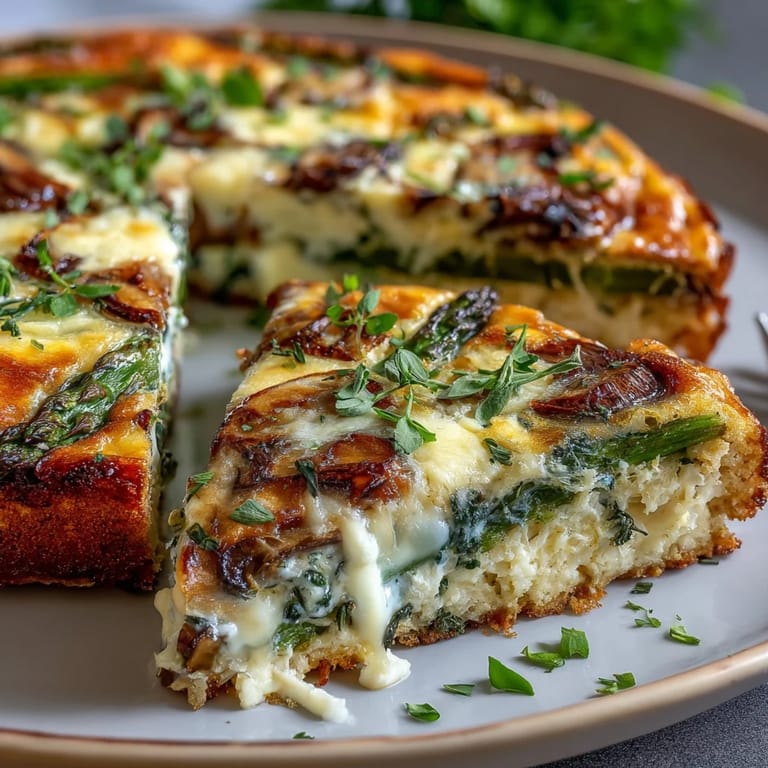
 There was something quietly satisfying about slicing into this frittata at the table and watching it hold its shape, the sourdough crust providing actual structure instead of just disintegrating into the eggs. That moment when something homemade looks as put-together as something you'd order out is worth experiencing.
Timing and Temperature Matter
The oven temperature here is specific because at 375°F, the bottom gets properly toasted while the eggs cook through gently without browning too quickly on top. I learned this after trying higher temperatures and ending up with an overbaked top and an undercooked center—375°F hits that sweet spot where everything finishes at the same time.
Variations Worth Trying
Once you understand how this frittata works, you can swap vegetables based on what's in season or what you have hanging around. Spring asparagus and mushrooms are perfect together, but summer zucchini and bell peppers, or fall roasted Brussels sprouts and caramelized onions, work just as beautifully. The real magic is in the technique, not the specific vegetables.
Serving and Storage
This frittata is genuinely good warm from the oven, but it's equally delicious at room temperature, which makes it perfect for brunch or for slicing up the next day for lunch. I've kept leftovers in the refrigerator for three days and they've reheated beautifully in a low oven, though honestly they disappear before that happens.
- Pair it with a bright green salad dressed in lemon vinaigrette to cut through the richness of the cheese and eggs.
- A crisp white wine like Sauvignon Blanc or a dry Albariño complements the spring vegetables and sourdough in a way that feels effortless.
- If you're making this for a crowd, let it cool for 10 minutes before removing from the springform pan, which makes it easier to slice cleanly.
 Save to Pinterest
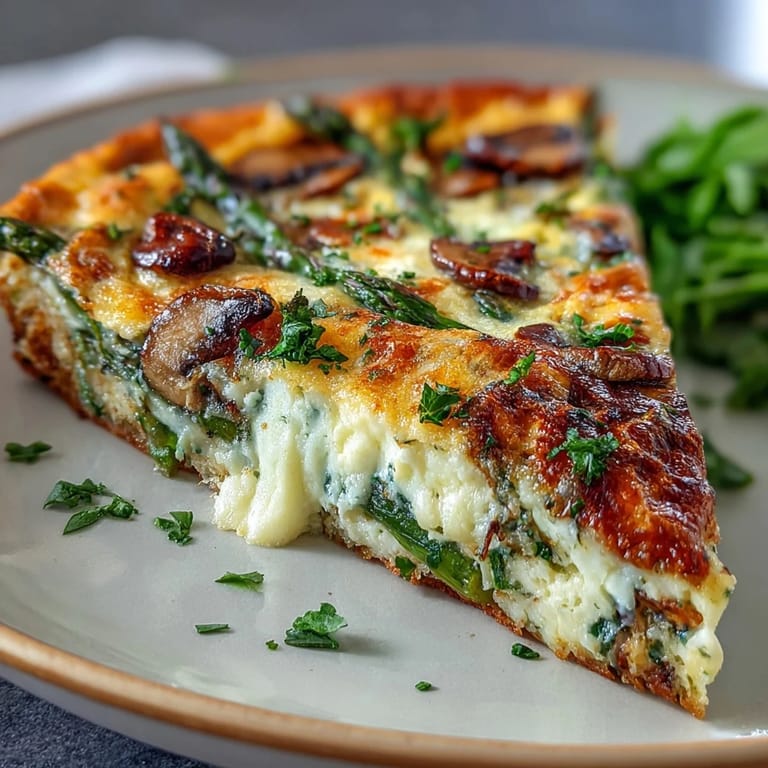
 Every time I make this, I'm reminded that the best dishes are the ones that don't require fancy techniques or hard-to-find ingredients, just respect for good components and a little attention to timing. It's the kind of recipe that sits at the intersection of simple and impressive, which is exactly where food should live.
Recipe FAQ
- → How do I prepare the sourdough crust?
Remove crusts from sourdough slices, line a springform pan, brush with melted butter, and bake until crisp before adding fillings.
- → Can I substitute the cheeses used?
Gruyère and Parmesan provide depth and meltability, but similar aged cheeses like Asiago or Swiss can work well.
- → What is the best way to cook the vegetables?
Sauté shallots, mushrooms, and asparagus in olive oil until tender and fragrant to enhance their flavors before baking.
- → How do I ensure the frittata sets properly?
Bake at moderate heat until the center is just set and the top is golden, avoiding overcooking to keep it moist.
- → Are there alternative ingredient options?
For a dairy-free version, substitute plant-based milk and cheese; add pancetta or smoked salmon for more protein.