 Save to Pinterest
 My sister called me in a panic one weeknight, asking if I could whip up something impressive for her partner's surprise visit. I had maybe twenty minutes and a thawing pack of shrimp in my freezer. That's when this stir-fry became my secret weapon—bright, garlicky, and proof that the best meals don't require hours of fussing. The kitchen filled with that unmistakable sizzle and aroma of ginger hitting hot oil, and I knew I'd cracked something special.
I made this for a dinner party once where someone mentioned being pescatarian, and honestly, everyone at that table—carnivores included—came back for seconds. There was this quiet moment when they were all eating, just focused on their plates, and I realized this wasn't some fussy showpiece. It was just genuinely delicious, straightforward food that tasted like it mattered.
Ingredients
- Large shrimp, peeled and deveined (1 lb): The backbone of this dish—buy them fresh or thawed, never frozen in the bag, and pat them dry before cooking so they sear properly instead of steaming.
- Red and yellow bell peppers, sliced: Their sweetness balances the savory sauce, and the color is half the appeal when you bring it to the table.
- Broccoli florets (1 small crown): Keeps its structure and bite if you don't overcrowd the pan or cook too long—trust the timing.
- Carrot, julienned: Thin cuts mean it cooks evenly and adds a subtle sweetness that rounds out the soy and ginger.
- Sugar snap peas (1 cup): These stay almost raw-feeling if timed right, which is exactly the texture you want.
- Green onions, sliced: Use the white parts in the stir-fry and scatter the green tops at the end for freshness and a gentle onion note.
- Low-sodium soy sauce (3 tbsp): Low-sodium lets you taste the other flavors instead of drowning everything in salt.
- Oyster sauce (1 tbsp, optional): Adds umami depth, but don't skip the tamari version if you're avoiding gluten.
- Sesame oil (2 tsp): A little goes a long way—it's potent and nutty, the secret to that restaurant-style finish.
- Honey or brown sugar (2 tbsp): Honey dissolves faster and adds shine to the sauce without the granules.
- Rice vinegar (1 tbsp): Brings brightness and cuts through the richness so the sauce doesn't feel heavy.
- Cornstarch (2 tsp) and water (2 tbsp): This slurry thickens the sauce so it clings to everything instead of pooling at the bottom of the pan.
- Vegetable oil (2 tbsp): Canola or peanut works best because they handle high heat without smoking.
- Garlic and ginger: Fresh is non-negotiable—the moment they hit the hot oil is when your kitchen smells like a proper restaurant.
- Sesame seeds and cilantro: Finish with these for a final layer of texture and freshness that makes people notice.
Tired of Takeout? 🥡
Get 10 meals you can make faster than delivery arrives. Seriously.
One email. No spam. Unsubscribe anytime.
Instructions
- Make your sauce first:
- Whisk together soy sauce, oyster sauce, sesame oil, honey, rice vinegar, cornstarch, and water in a small bowl and set it aside. This way you're not scrambling once everything's hot and moving fast.
- Prep and dry your shrimp:
- Pat them with paper towels so they sear instead of releasing water and steaming. A light pinch of salt and pepper is all they need.
- Get the pan screaming hot:
- Heat 1 tablespoon of oil in a large skillet or wok over medium-high heat until it shimmers. You'll hear the oil starting to pop slightly—that's your signal.
- Sear the shrimp fast:
- Add them in a single layer and let them sit for about a minute before stirring. After 2 to 3 minutes total, they'll be pink and just cooked through—remove them to a plate and don't overcook or they turn into rubber.
- Build your flavor base:
- Add the remaining tablespoon of oil, then immediately add the garlic and ginger. Stir constantly for about 30 seconds until the smell hits you like a wave—that's when you know they're releasing their oils.
- Stir-fry your vegetables:
- Toss in the peppers, broccoli, carrot, and snap peas. Keep everything moving over the heat for 3 to 5 minutes, listening for that occasional crackling sound that means things are caramelizing at the edges. You want them tender but still with some resistance when you bite.
- Bring it all together:
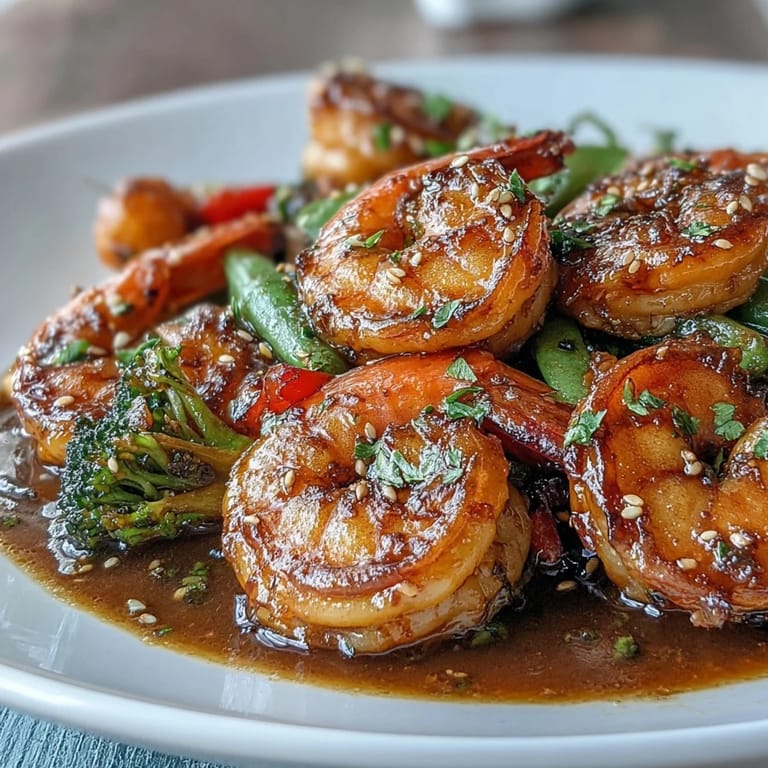
- Return the shrimp, add the green onions, and pour in your sauce. Stir everything constantly for 2 to 3 minutes until the sauce thickens and coats everything like a glossy blanket.
- Finish and serve:
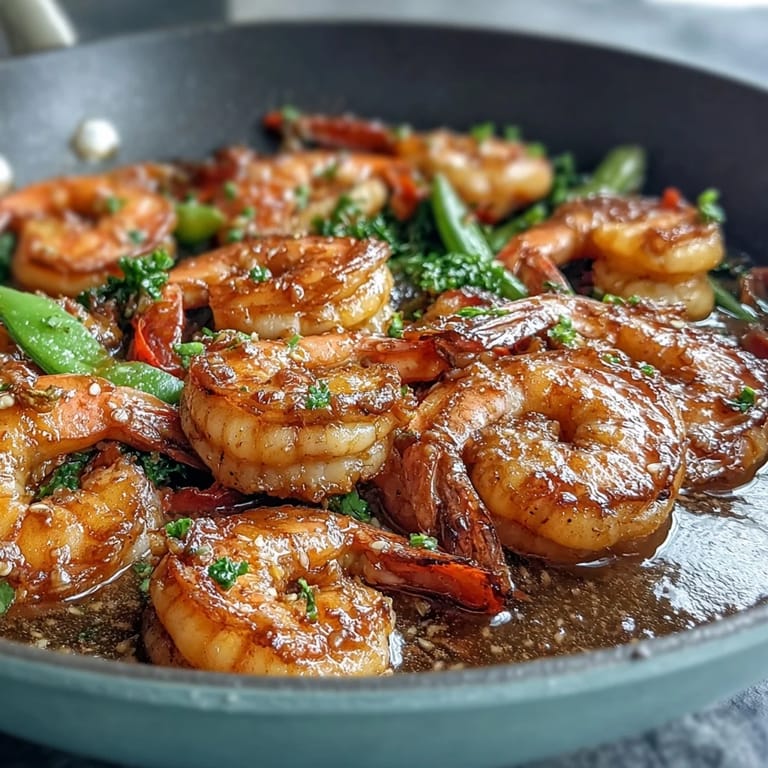
- Top with sesame seeds and fresh cilantro, and get it to the table while it's still hot. Serve over steamed rice or noodles if you like something underneath to catch the sauce.
 Save to Pinterest
 There's something about watching someone taste this for the first time and seeing their eyes light up when they realize it took less than half an hour. That's when I understood this recipe wasn't just efficient—it was genuinely satisfying in a way that matters.
How to Pick the Perfect Shrimp
I learned the hard way that size matters here. Medium shrimp cook unevenly—some done, some still a little translucent—while large shrimp give you a window of a few minutes where everything's perfect at once. The shells should feel firm and smell clean, almost sweet, never fishy or ammonia-like. If you're buying frozen, thaw them in the fridge overnight, not on the counter, so they stay firm and don't absorb water.
Vegetable Timing is Everything
I used to add everything at once and end up with mushy broccoli while the carrots stayed hard. Now I've learned that carrots and broccoli go in first since they need the most time, then peppers and snap peas in the last minute or two. The whole stir-fry from empty pan to plated takes about 15 minutes of actual cooking, and that short time is what keeps everything crisp and alive-tasting instead of limp.
Sauce Flexibility and Storage
The beauty of this sauce is how forgiving it is—you can add a pinch of red pepper flakes if you like heat, or a splash more rice vinegar if you want it brighter. I've also discovered that if you're cooking for people with different diets, you can easily swap the shrimp for sliced chicken breast or cubed tofu and everything else stays exactly the same. Leftovers keep in the fridge for about two days, though the vegetables soften a bit.
- For extra heat, a pinch of red pepper flakes or sliced fresh chili goes in with the garlic and ginger.
- If you're substituting shrimp, chicken cooks in about the same time, but tofu needs a slightly longer sear to brown properly.
- Leftovers reheat better in a pan over heat than in the microwave, where they tend to dry out.
 Save to Pinterest
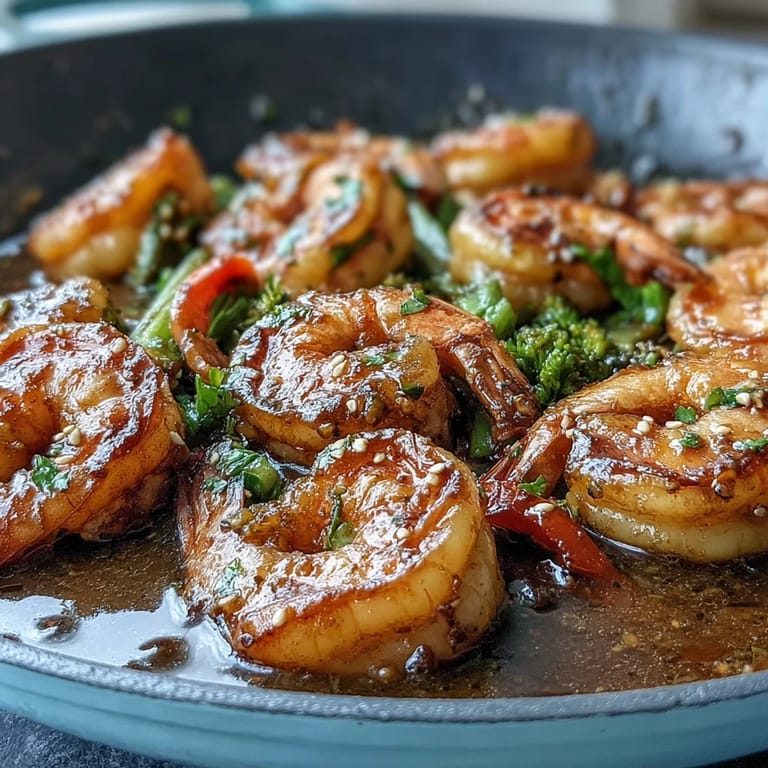
 This stir-fry has become my go-to when I want to feel like I've actually cooked something impressive without spending the whole evening in the kitchen. It's proof that speed and quality don't have to be enemies.
Recipe FAQ
- → What type of oil is best for stir-frying shrimp?
Vegetable oils with a high smoke point such as canola or peanut oil work best as they allow quick cooking without burning.
- → How can I make the sauce thicker?
Using cornstarch dissolved in water, then cooked briefly with the sauce, helps thicken it to a glossy consistency.
- → Can other proteins be used instead of shrimp?
Chicken or tofu can be excellent substitutes, offering different textures while absorbing the sauce flavors well.
- → How do I keep vegetables crisp-tender during cooking?
Stir-frying over medium-high heat for a short time preserves crunchiness while cooking vegetables evenly.
- → What garnishes enhance this dish?
Sprinkling toasted sesame seeds and fresh cilantro or sliced green onion adds extra aroma and texture.