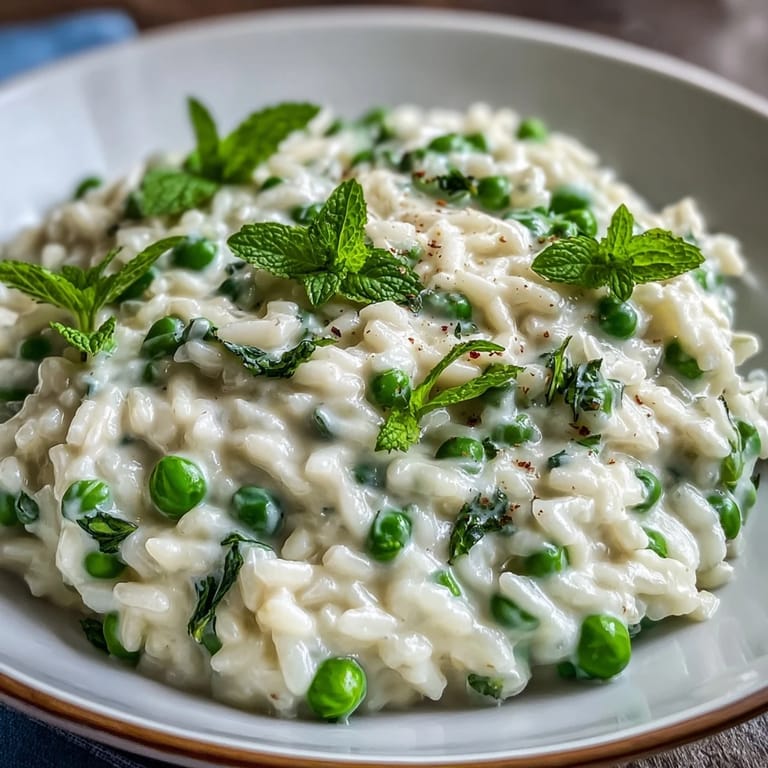
 Save to Pinterest
 Last spring, I stood in my kitchen on one of those first warm afternoons when you can actually feel the season shifting, and all I wanted was something that tasted like green and butter and the promise of longer days. My neighbor had just dropped off a bag of the most gorgeous fresh peas from her garden, still in their pods, and I remembered my grandmother mentioning that risotto was the way to turn simple things into something that felt almost luxurious. So I started stirring, and by the time that mint hit the pan, I understood why she loved it so much.
I made this for my sister's first dinner party in her new apartment, and watching her face light up when she tasted it was somehow more satisfying than eating it myself. She kept asking what was in it because it seemed too simple to taste so complete, and I loved that she couldn't quite put her finger on why the mint and lemon made such a difference. That risotto became her signature dish within a month.
Ingredients
- Fresh or frozen spring peas, 1 cup: If you can find fresh peas in their pods, they're worth the five minutes of shelling, but frozen ones work beautifully and honestly sometimes taste fresher than the sad supermarket pods.
- Arborio rice, 1 1/2 cups: This short-grain rice is the only kind that makes risotto actually creamy, so don't reach for long-grain rice thinking it won't matter.
- Unsalted butter, 3 tablespoons divided: Use good butter here because you can taste it, and the split between cooking and finishing matters more than you'd think.
- Parmesan cheese, 1/2 cup grated: Always grate it fresh if possible, because pre-grated often has anti-caking agents that make it clumpy.
- Vegetable broth, 4 cups kept warm: This needs to stay hot throughout cooking, so keep it simmering in another pot rather than letting it cool down between additions.
- Dry white wine, 1/2 cup: Something you'd actually drink makes a difference, but save the fancy bottles for sipping.
- Onion, 1 small finely chopped: The foundation of everything good in risotto is taking time with this onion until it's truly soft and sweet.
- Garlic, 2 cloves minced: Don't skip this or add it too early, because raw garlic tastes harsh and burnt garlic tastes bitter.
- Fresh mint leaves, 2 tablespoons finely chopped: Tear it by hand just before you use it so it doesn't bruise and turn dark, which dulls the brightness.
- Lemon zest, from 1 lemon optional: This tiny addition is what makes people stop mid-bite and ask what you did, so don't leave it out.
- Extra-virgin olive oil, 2 tablespoons: This gets you started with the butter and helps prevent the butter from burning on its own.
- Heavy cream, 1/4 cup optional: Some people skip it, some swear by it, and honestly it's about what mood you're in when you're cooking.
- Salt and freshly ground black pepper, to taste: Add these at the end so you can actually taste how much you need.
Tired of Takeout? 🥡
Get 10 meals you can make faster than delivery arrives. Seriously.
One email. No spam. Unsubscribe anytime.
Instructions
- Get your broth warm and ready:
- Pour your vegetable broth into a separate pot and bring it to a gentle simmer over low heat. This step feels small but it changes everything because cold broth stops the cooking process and messes up your timeline.
- Wake up the onion and garlic:
- Heat the olive oil and two tablespoons of butter in a large heavy-bottomed skillet over medium heat, then add your chopped onion. You're looking for it to turn soft and translucent, which takes about four minutes and should smell sweet, not sharp.
- Add the garlic:
- After the onion is ready, add your minced garlic and let it cook for just a minute until the smell completely changes and becomes fragrant. Watch it carefully because this is the point where things go from subtle to burnt if you're not paying attention.
- Toast the rice:
- Stir in your Arborio rice and keep stirring for two minutes, making sure every grain gets coated in the butter and oil. You'll notice the rice starting to look slightly translucent at the edges, which is exactly what you want to see.
- Add the wine:
- Pour in the white wine and keep stirring until it's almost completely absorbed into the rice. The smell of wine and butter together is one of my favorite kitchen moments.
- Start the stirring ritual:
- Add the warm broth one ladle at a time, stirring frequently and waiting until each addition is mostly absorbed before adding more. This takes about eighteen to twenty minutes and feels meditative once you settle into the rhythm of it.
- Bring in the peas:
- About five minutes before the rice is done, stir in your peas and let them warm through while the risotto finishes cooking.
- Finish with the good stuff:
- Remove the pan from heat and stir in the remaining tablespoon of butter, the grated Parmesan, the heavy cream if you're using it, the fresh mint, and the lemon zest. Taste it and season with salt and pepper until it tastes like something you'd be proud to eat.
- Rest and serve:
- Let it sit for two minutes before serving because risotto needs that moment to settle. Garnish each bowl with extra mint and Parmesan if you want to look like you know what you're doing.
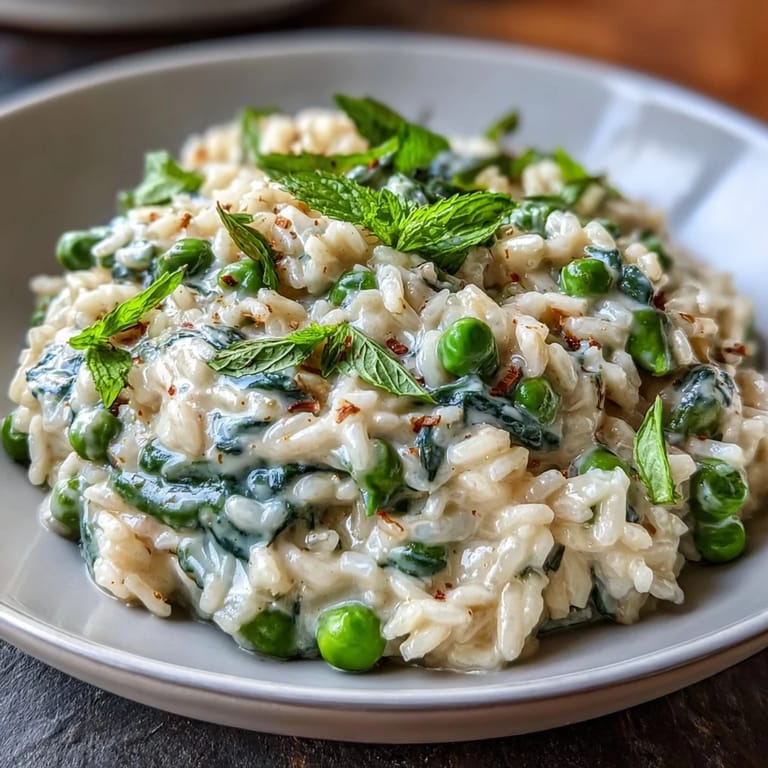 Save to Pinterest
 There's something almost meditative about standing at the stove for twenty minutes, ladle in hand, watching the rice slowly transform from hard little grains into something soft and luxurious. By the end you feel like you've actually cooked something, not just followed instructions.
Why This Combination Works
Spring peas and mint are made for each other, the way they taste together is like nature planned it that way. The Parmesan adds that savory depth that keeps everything from feeling too light or summery, and the lemon zest comes in at the very end like a secret handshake that makes everything else taste more like itself. When you stir it all together off the heat, you're not just mixing ingredients, you're building something that actually feels finished.
Timing and Temperature Matter
I learned this the hard way when I tried to speed up risotto by using hot broth that was almost boiling, and the rice cooked unevenly with crunchy spots in every bite. Now I keep the broth at a gentle simmer, and it makes all the difference in how evenly everything cooks. Temperature consistency sounds boring until you taste what it does for the final dish.
Make It Your Own
Some nights I add a handful of baby spinach just as I'm finishing, and other times I've stirred in some pesto instead of the mint, which turns into something completely different but equally good. The base is strong enough to handle experimentation, which is why I keep coming back to it. Once you understand how risotto works, you start to see endless possibilities.
- Fresh herbs like basil or tarragon work beautifully if you don't have mint, so use what makes you happy.
- A handful of toasted pine nuts or crispy pancetta on top adds texture if you want to turn this into something fancy for guests.
- If you make it vegan, just use vegan butter and a good vegan Parmesan alternative and honestly nobody will notice the difference.
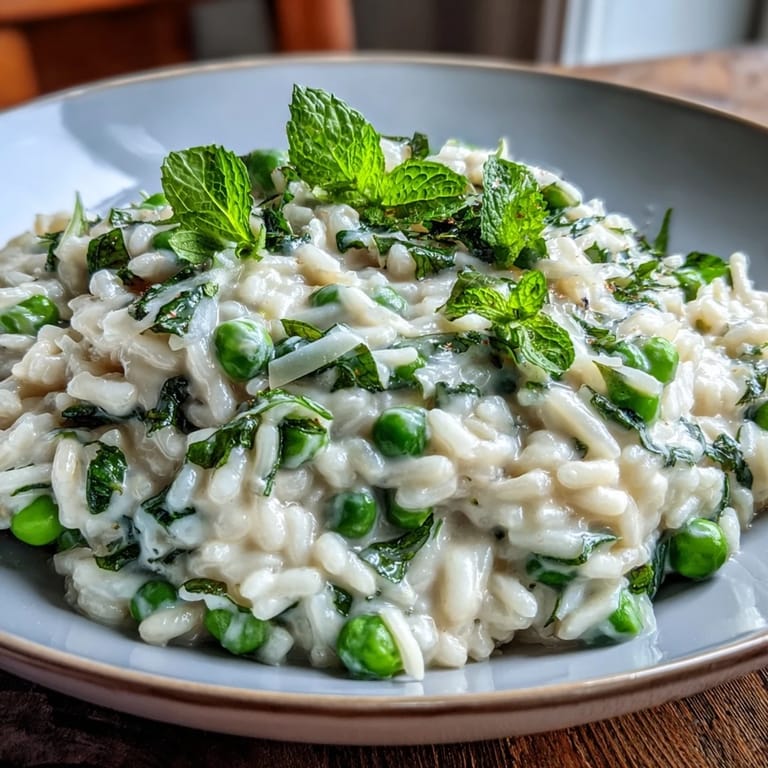 Save to Pinterest
 This risotto is one of those dishes that feels elegant enough to cook for people you want to impress, but it's also just as good on a Tuesday night when you're cooking for yourself. It tastes like spring, like care, and like you actually know what you're doing in the kitchen.
Recipe FAQ
- → How do I achieve the perfect creamy texture?
Slowly adding warm broth while stirring constantly allows the rice to release starch, creating a creamy consistency without being mushy.
- → Can I use frozen spring peas?
Yes, frozen peas can be added directly during the last 5 minutes of cooking to maintain their sweetness and texture.
- → What is the best way to incorporate fresh mint?
Stir fresh, finely chopped mint into the risotto just before finishing to preserve its bright, aromatic flavor.
- → Is white wine essential for this dish?
White wine adds depth and acidity, but you can substitute with extra broth if preferred, though flavor complexity will be reduced.
- → How do I prevent the risotto from sticking to the pan?
Use a heavy-bottomed pan and stir frequently while cooking over medium heat to prevent sticking and ensure even cooking.
- → What alternatives can I use for a dairy-free version?
Replace butter with a plant-based oil or vegan butter and Parmesan with nutritional yeast or vegan cheese substitutes for similar richness.