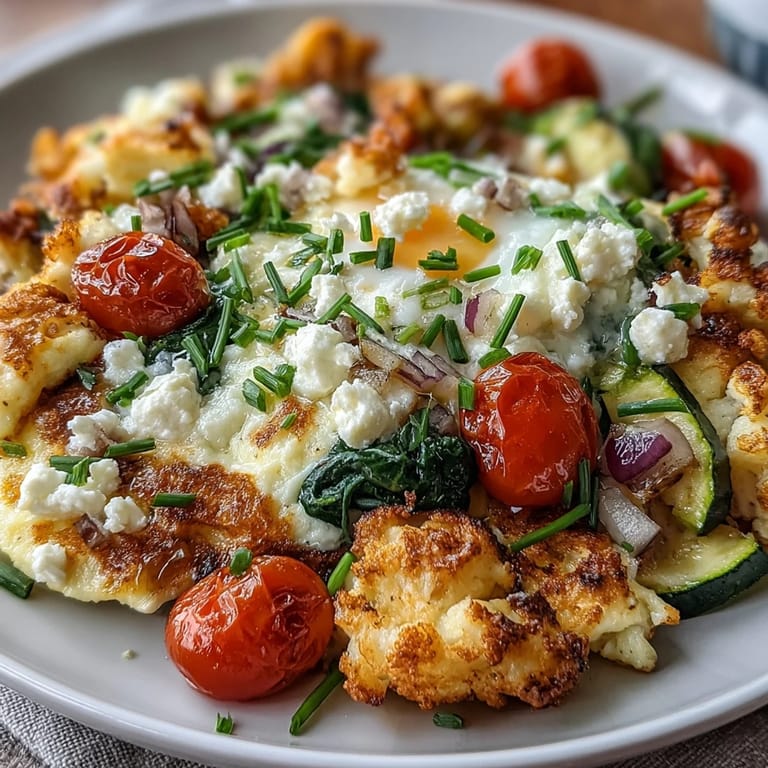
 Save to Pinterest
 One Sunday morning, my partner wandered into the kitchen asking why breakfast always felt like either eggs or nothing. That question stuck with me through the week, and by Friday I was dumping cottage cheese into a bowl of whisked eggs, tossing in whatever vegetables needed rescuing from the crisper drawer, and sliding the whole thing into the oven. Twenty-five minutes later, we had something that tasted restaurant-quality but required almost no actual cooking skill. That sheet pan became our secret weapon for the weeks ahead.
I made this for my sister during her first week back at her new job, when she kept texting me that she was too exhausted to think about meals. She reheated a slice at her desk, and three days later she called asking for the recipe because her coworkers were asking what she was eating. That's when I knew this wasn't just breakfast—it was permission to take care of yourself without fanfare.
Ingredients
- Eggs (10 large): The base that transforms from runny to set, creating structure while staying tender if you don't overbake.
- Low-fat cottage cheese (1 1/2 cups): This is the secret—it adds creaminess and protein without heaviness, and the curds create little pockets of richness throughout.
- Milk (1/4 cup): Use whatever version you prefer; it just loosens the mixture so the eggs bake evenly rather than turning dense and rubbery.
- Cherry tomatoes (1 cup, halved): They burst slightly during baking and release their sweetness, creating little flavor moments in each bite.
- Baby spinach (1 cup, chopped): Wilts down completely so you get nutrition without any leafy texture, and it darkens everything beautifully.
- Red bell pepper (1/2 cup, diced): Adds crunch and color, though it softens enough that you never feel like you're eating raw vegetable filler.
- Zucchini (1/2 cup, diced): Becomes tender and almost sweet as it bakes, filling in gaps so every forkful has something interesting.
- Red onion (1/4 cup, minced): Mellows completely from the heat, adding a gentle depth that you taste but don't identify as onion.
- Salt, pepper, and oregano: Keep it simple—these seasonings let the vegetables and eggs shine without competing flavors.
- Fresh chives or parsley: A bright finish that wakes everything up and reminds you this is supposed to feel fresh, not baked.
Tired of Takeout? 🥡
Get 10 meals you can make faster than delivery arrives. Seriously.
One email. No spam. Unsubscribe anytime.
Instructions
- Set your stage:
- Heat the oven to 375°F and grease your 13x9 inch baking sheet—nonstick spray works fastest, but parchment paper is your friend if you're worried about sticking. The oven needs those few minutes to reach temperature while you prep.
- Build the base:
- Crack those 10 eggs into a large bowl and whisk them like you mean it, breaking up the whites and yolks until they're uniformly pale and slightly frothy. This aeration is what keeps the final texture light instead of dense.
- Introduce the cottage cheese:
- Add the cottage cheese and milk, whisking until you have a mostly smooth mixture with some small curds still visible—that's perfect. Don't overmix or you'll lose the texture that makes this special.
- Season and add herbs:
- Stir in salt, pepper, and dried oregano, tasting as you go because these are your only flavor-builders at this stage. A tiny pinch of chili flakes is lovely if you're feeling adventurous.
- Fold in the vegetables:
- Add all your prepped vegetables in one go, stirring gently just until everything is distributed so you don't bruise the spinach or overwork the mixture. Every vegetable should be visible but fully incorporated.
- Pour and settle:
- Pour the entire mixture onto your prepared sheet and give the pan a few gentle taps on the counter to level everything out and eliminate air pockets. You want an even layer that bakes uniformly.
- Bake to perfection:
- Slide into the oven for 22 to 25 minutes—watch for the edges to turn lightly golden and the center to stop jiggling when you give the pan a little shake. The residual heat will continue cooking it slightly after you remove it.
- Rest and serve:
- Let it cool for 5 minutes on the counter, which makes it easier to slice cleanly and allows the center to fully set. Sprinkle with fresh chives, slice into squares, and serve warm or at room temperature.
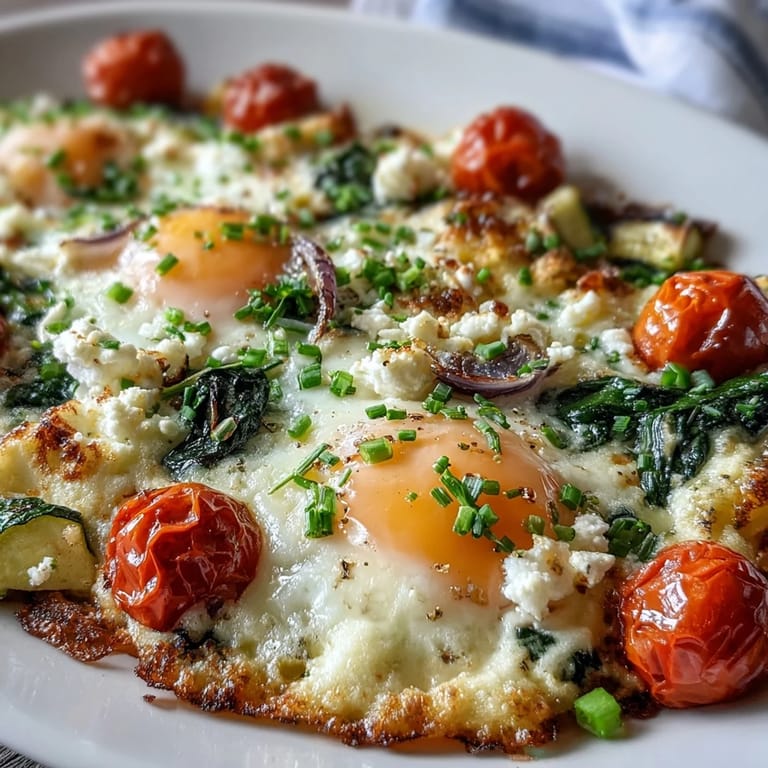 Save to Pinterest
 My niece, who lives on chicken nuggets and refuses vegetables, tried this because she was hungry and it was there. She asked for seconds without comment, which in preteen language means you've done something right. That small moment of watching someone eat something nourishing without complaint stuck with me more than any diet could.
Meal Prep Made Simple
This dish exists because breakfast is the meal we skip when life gets busy, and that's where everything falls apart nutritionally. I started making this on Sundays specifically because the cold slices taste just as good as warm ones, fitting into containers and traveling to offices without falling apart. You can reheat slices in the microwave for 60 seconds, grab them straight from the fridge if you're running late, or layer them into a lunchbox for afternoon hunger emergencies.
Customizing Your Sheet Pan
The vegetables here are suggestions, not rules—I've made versions with roasted mushrooms, diced broccoli, sun-dried tomatoes, and even thinly sliced asparagus. The only real requirement is using roughly the same volume so your bake time stays accurate and the texture doesn't change dramatically. This flexibility is why it's become my go-to recipe when I'm cleaning out the refrigerator and need to use things before they wilt.
Elevating the Basics
Once you understand how this works, you'll start experimenting with additions that transform it from healthy breakfast into something you actually crave. I've stirred in shredded cheddar before baking, sprinkled fresh dill on top, even mixed in crumbled feta for a Mediterranean twist. The cottage cheese base is forgiving enough that most additions work, as long as you're not adding excess moisture that changes the bake time.
- Cheese makes everything better—try sharp cheddar, feta, or fresh mozzarella depending on your mood.
- Fresh herbs mixed in before baking add depth, while herbs added after maintain their brightness and individual flavor.
- Serve alongside avocado slices, whole grain toast, or a small salad to complete the meal without overcomplicating things.
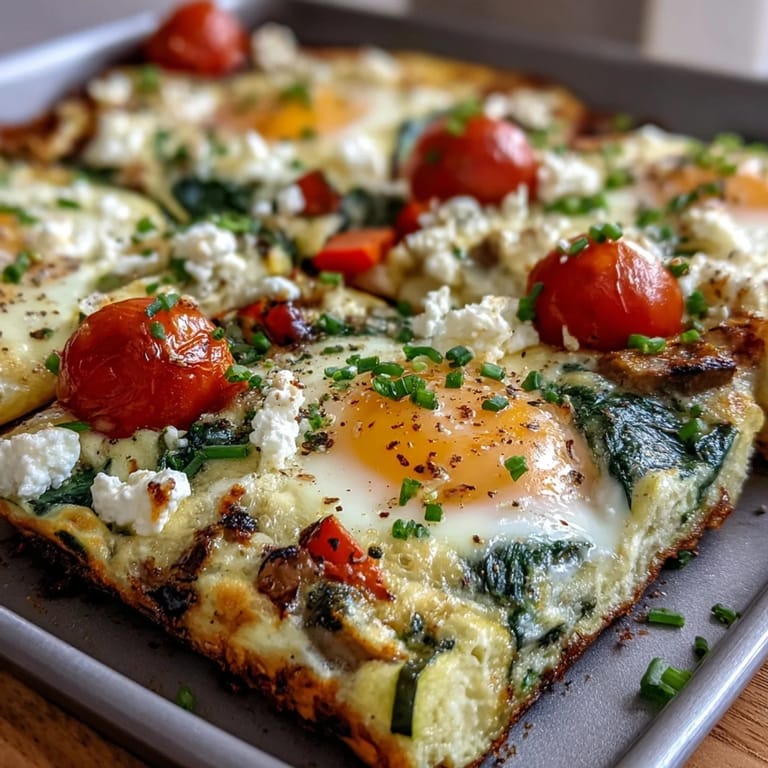 Save to Pinterest
 This sheet pan breakfast stopped being about convenience the day someone told me it made them feel capable of taking care of themselves, and that's all breakfast should really do. It's been living in my regular rotation ever since.
Recipe FAQ
- → Can I prepare these eggs ahead of time?
Yes, these sheet pan eggs are ideal for meal prep. Store cooled slices in airtight containers in the refrigerator for up to 4 days. Reheat individual portions in the microwave for 30-60 seconds until warmed through.
- → What vegetables work best in this dish?
Cherry tomatoes, spinach, bell peppers, zucchini, and red onion provide excellent texture and flavor. You can also substitute mushrooms, broccoli, asparagus, or any fresh vegetables you enjoy. Just keep the total vegetable amount roughly the same.
- → Why add cottage cheese to eggs?
Cottage cheese adds moisture, creaminess, and a significant protein boost—about 15 grams per serving. It creates a fluffy texture while baking and helps the eggs stay tender without becoming dry or rubbery.
- → Can I freeze these baked eggs?
Yes, freeze cooled slices in freezer-safe containers with parchment paper between layers. They'll keep for up to 2 months. Thaw overnight in the refrigerator before reheating.
- → What size baking sheet works best?
A standard 13x9 inch rimmed baking sheet creates the ideal thickness—about 1 inch tall when baked. Using a larger pan will make thinner eggs that cook faster, while a smaller pan creates thicker squares that need more time.