 Save to Pinterest
 There's something almost meditative about assembling a vegetable and legume bowl, watching all those colors come together like edible confetti. I discovered this particular combination on a Tuesday afternoon when my fridge was bursting with vegetables I'd bought with good intentions but little direction. Instead of letting them wilt, I tossed everything on a sheet pan, roasted them until they sang with caramelized edges, and suddenly had something far more satisfying than I'd imagined. The tahini dressing was the revelation, creamy and garlicky, turning what could've been a boring salad into something I actually craved.
My coworker Sarah grabbed a bowl from my lunch one day and declared it the most satisfying thing she'd eaten in weeks, which led to an unexpected lunch tradition where I'd make double batches on Sundays. Watching her demolish it so quickly, chatting between bites about how the roasted vegetables had this nutty quality she didn't expect, reminded me that food doesn't need to be complicated to feel genuinely nourishing. That moment shifted how I think about meal prep entirely.
Ingredients
- Quinoa, brown rice, or farro (1 cup): Use quinoa if you want a lighter, fluffier base that cooks fastest, brown rice for earthiness, or farro for a slightly chewy texture and nuttier flavor—each transforms the whole bowl in subtle ways.
- Water or vegetable broth (2 cups) and salt (1/2 tsp): Broth adds depth that plain water can't match, but either works; the salt is crucial for seasoning the grain itself, not an afterthought.
- Cooked chickpeas (1 cup): Canned saves time and honestly tastes just as good as dried if you rinse them well, but roast them separately if you want them crispy.
- Cooked lentils, green or brown (1 cup): Green lentils hold their shape and have a subtle peppery note, while brown lentils are earthier and slightly softer; don't skip this pairing with chickpeas since they offer different textures.
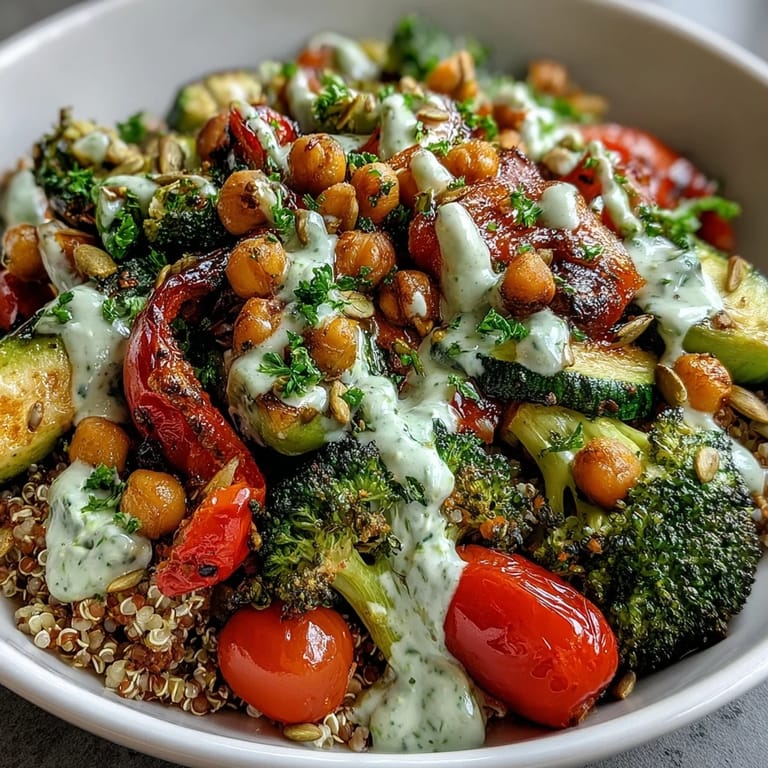
- Bell pepper, zucchini, red onion, cherry tomatoes, broccoli: These are suggestions, not rules—roast whatever vegetables are in season or calling to you from the market.
- Olive oil (2 tbsp), smoked paprika (1 tsp), ground cumin (1/2 tsp): The spices aren't just flavoring; they create a slightly smoky depth that makes roasted vegetables taste intentional rather than plain.
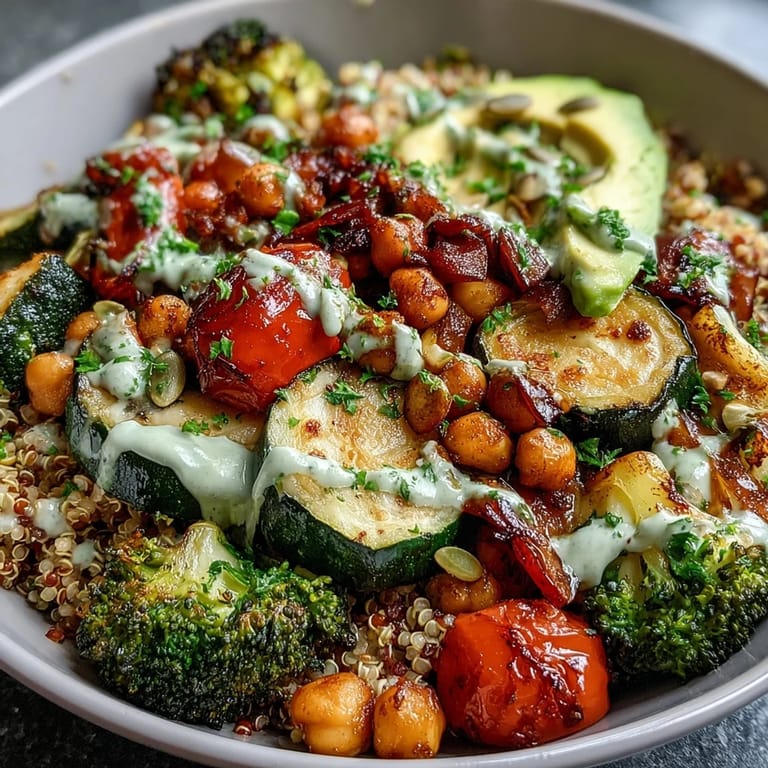
- Fresh parsley, avocado, toasted pumpkin seeds, lemon wedges: These garnishes aren't decorative—the bright parsley cuts richness, the creamy avocado adds luxury, and the seeds provide a surprising crunch.
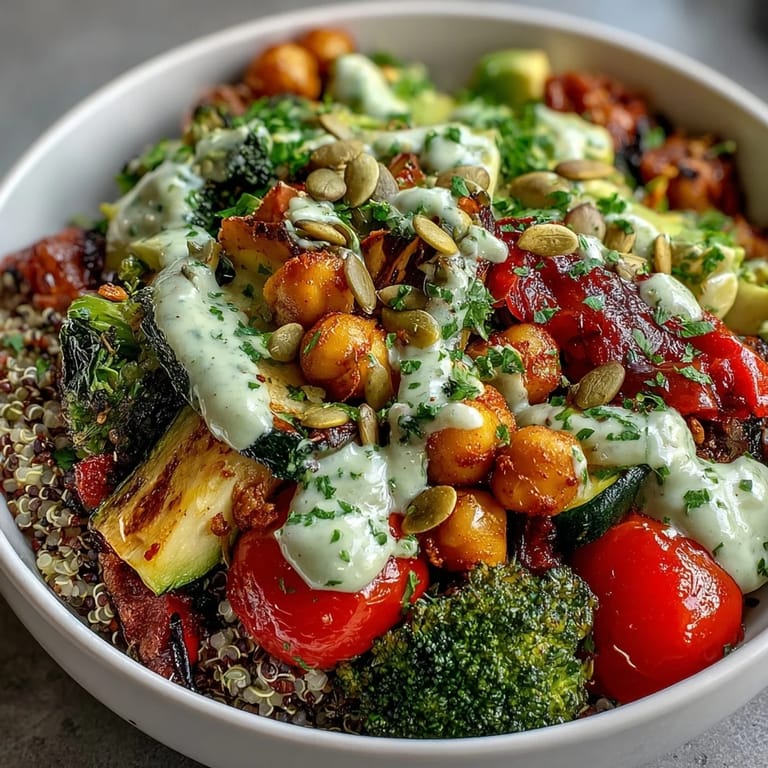
- Tahini (2 tbsp), lemon juice (1 tbsp), water, garlic, salt and pepper: This dressing is where the bowl becomes something special; tahini creates creaminess without dairy, while lemon keeps it from feeling heavy.
Tired of Takeout? 🥡
Get 10 meals you can make faster than delivery arrives. Seriously.
One email. No spam. Unsubscribe anytime.
Instructions
- Heat your oven and set the stage:
- Preheat to 425°F and while it's warming up, gather all your vegetables—this mental preparation makes the actual cooking feel less rushed.
- Start your grains:
- Bring water or broth and salt to a boil in a medium saucepan, add your chosen grain, then reduce heat to low and cover. The timing varies (quinoa takes 15 minutes, farro about 25, brown rice closer to 40), so set a gentle timer and resist the urge to peek too often.
- Prepare and season your vegetables:
- Toss your diced bell pepper, sliced zucchini, onion wedges, halved cherry tomatoes, and broccoli florets with olive oil, smoked paprika, cumin, salt, and pepper until everything glistens with oil. Spread them in a single layer on your baking sheet—crowding them prevents proper roasting.
- Roast until the edges char:
- Slide the sheet into your hot oven for 20 to 25 minutes, stirring everything halfway through so the vegetables caramelize evenly on all sides. You're looking for tender vegetables with slightly darkened, crispy edges that taste almost nutty.
- Warm your legumes if desired:
- Pour your drained chickpeas and lentils into a small pan with a splash of olive oil, salt, and pepper, and warm them through for just 2 to 3 minutes. This isn't strictly necessary but creates a cozier texture than cold legumes straight from the can.
- Make the tahini dressing:
- Whisk tahini, lemon juice, minced garlic, salt, and pepper together, then slowly add water a splash at a time until you reach a consistency that's pourable but still thick enough to cling to the vegetables. Taste as you go and adjust the lemon juice or salt until it feels balanced.
- Assemble your bowls:
- Divide your cooked grains among four bowls, then top each with the warm roasted vegetables and legumes. Drizzle generously with tahini dressing so every spoonful gets that creamy coating.
- Finish with flourish:
- Scatter fresh parsley, avocado slices, and toasted pumpkin seeds over each bowl, then serve with lemon wedges on the side so people can add brightness to taste.
 Save to Pinterest
 My friend Marcus showed up one evening skeptical that vegetables could ever be interesting enough for dinner, then came back three times in two weeks asking how I made them taste so good. That moment taught me that the secret isn't exotic ingredients or complicated techniques—it's just respecting the vegetables enough to let them roast until something magical happens in the heat.
The Magic of Roasting
Roasting isn't just a cooking method; it's a flavor transformer. When vegetables hit that 425-degree heat, their natural sugars caramelize, water evaporates, and suddenly a plain zucchini tastes almost sweet while onions become deeply savory. I learned this the hard way after years of steaming vegetables and wondering why nobody got excited about them. The slight charring on the edges is intentional—it's where the real complexity lives. You want some vegetables lightly browned, not uniformly cooked.
Grain Selection Matters More Than You Think
The grain you choose sets the entire mood of the bowl. Quinoa makes it feel light and modern, brown rice grounds it with earthiness, and farro brings a chewy sophistication that makes people actually comment on the texture. I spent weeks rotating through all three before realizing I wasn't just picking a side dish—I was choosing the foundation of the whole experience. Each grain absorbs the dressing differently too; farro holds onto the tahini dressing more stubbornly, creating richer bites.
Why This Bowl Works Year-Round
The beautiful truth about this recipe is that it adapts beautifully to whatever season is happening around you. Winter calls for roasted Brussels sprouts and cauliflower, spring begs for asparagus and peas, summer loves basil-forward tomatoes, and fall practically demands sweet potato and kale. I've made this bowl in every season, and it never feels stale because the vegetables themselves keep it honest. The core structure stays the same, but the bowl tells you what's fresh and available to work with.
- Try roasting sweet potato chunks with cinnamon and a light dusting of cumin for an autumn version.
- Swap broccoli for fresh spring peas or asparagus when they're at their peak.
- Add fresh herbs like cilantro or mint if you have them growing in your kitchen garden.
 Save to Pinterest
 This bowl became my answer to the question I'd asked myself for years: how do you make vegetables feel like actual dinner and not just the healthy side nobody's excited about? Turn out the answer was patience, heat, and believing that simple ingredients deserve respect.
Recipe FAQ
- → Can I make this bowl ahead of time?
Absolutely. The grains and roasted vegetables store well in separate airtight containers for up to 4 days. Reheat gently and add fresh garnishes like avocado and parsley when serving.
- → What other grains work well in this bowl?
Beyond quinoa and brown rice, try farro for nutty flavor, barley for chewy texture, or millet for a lighter option. For gluten-free needs, stick with quinoa, rice, or certified gluten-free grains.
- → Can I use frozen vegetables instead of fresh?
Yes, though fresh vegetables roast better. If using frozen, thaw and pat them thoroughly dry before tossing with spices and oil. Roast time may need slight adjustment.
- → How do I store leftovers?
Keep grains, vegetables, legumes, and dressing in separate containers. The grains and vegetables last 4-5 days refrigerated. Store dressing separately and add fresh avocado just before eating.
- → Can I add protein other than legumes?
Grilled chicken, baked tofu, or roasted salmon pair beautifully. For additional plant-based protein, try adding hemp seeds, nutritional yeast, or extra legumes.
- → What vegetables can I substitute?
Sweet potato, cauliflower, carrots, eggplant, or Brussels sprouts all roast wonderfully. Use whatever seasonal vegetables you have on hand, keeping pieces similar in size for even cooking.