 Save to Pinterest
 My neighbor knocked on the kitchen window one April afternoon, arms full of fresh mint from her garden, asking if I could use it before it got away from her. I had a box of pasta and some peas in the freezer, so I threw together this salad on the spot—nothing fancy, just bright and alive. That first bite, with the lemon hitting your tongue before the sweetness of the peas, made me realize how little you sometimes need to make something memorable. Now whenever spring hits and the herbs start pushing through, this is what I reach for.
I made this for a potluck once where everyone brought something warm and heavy, and watching people's faces light up when they tasted something cool and zingy was the best part of my evening. One woman asked for the recipe right there, napkin in hand, and I realized it wasn't the ingredients—it was how simple and honest the dish felt. That's when it became my go-to for any gathering where I want people to feel seen, not stuffed.
Ingredients
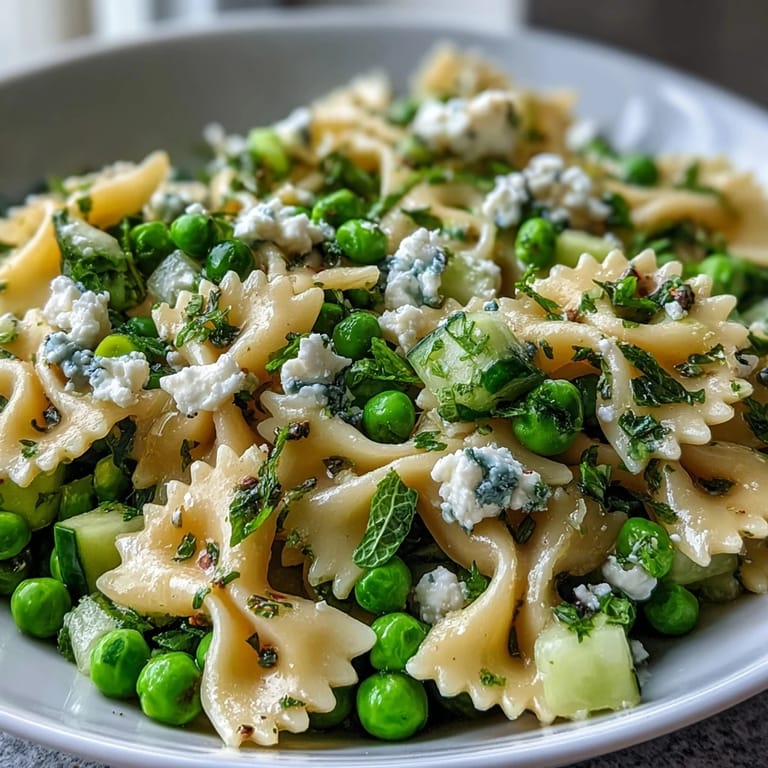
- Pasta: Use small shapes like farfalle or orecchiette so the vinaigrette clings to every piece; they also feel nicer on your fork than long strands would.
- Fresh or frozen peas: Frozen peas are honestly just as good as fresh here, and sometimes better because they're picked at peak sweetness.
- Cucumber: Dice it just before mixing so it stays crisp and doesn't weep water into the salad.
- Spring onions: Slice them thin and use both the white and green parts for a gentle onion flavor without any harsh bite.
- Fresh mint: Chop it by hand rather than with a food processor, which bruises the leaves and makes them taste a bit musty.
- Flat-leaf parsley: This adds earthiness that balances the brightness of the mint without competing with it.
- Feta cheese: Crumble it just before serving so it stays in distinct, creamy pockets rather than turning into dust.
- Lemon zest and juice: Use a microplane for the zest—it gives you the fragrant oils without the bitter white pith underneath.
- Extra-virgin olive oil: The quality matters here since it's not being cooked down; use something you'd actually want to taste.
- Dijon mustard: It acts as an emulsifier and keeps the vinaigrette from separating, plus it adds a subtle tanginess.
- Honey: A small amount rounds out the acidity without making the dressing taste sweet, maple syrup works just as well.
- Garlic: Mince it finely and let it sit for a few minutes before mixing into the vinaigrette so it releases its flavor fully.
Tired of Takeout? 🥡
Get 10 meals you can make faster than delivery arrives. Seriously.
One email. No spam. Unsubscribe anytime.
Instructions
- Get the pasta going:
- Bring a big pot of salted water to a rolling boil—you want it to taste like the sea, which is the only way pasta picks up real flavor. Drop in your pasta and stir it once so nothing sticks, then let it cook according to the package timing until it's just tender enough to bite through without resistance.
- Time the peas right:
- About two minutes before your pasta finishes, add the peas so they warm through and get just a little softer. Both finish at the same moment, which is the small bit of timing that matters here.
- Cool everything down:
- Drain the pasta and peas in a colander, then run cold water over them while stirring gently with your fingers—this stops them from cooking further and keeps them from turning mushy and sad.
- Build your base:
- Toss the cooled pasta and peas with the cucumber, spring onions, mint, and parsley in a big bowl, handling it gently so the vegetables stay in distinct pieces rather than becoming a mashed situation.
- Make the vinaigrette:
- In a small jar or bowl, combine the lemon zest and juice with the olive oil, mustard, honey, and garlic, then whisk it all together until it looks smooth and slightly thickened. Taste it straight—it should make your mouth wake up.
- Bring it together:
- Pour the vinaigrette over the salad and toss everything gently but thoroughly so every piece gets coated without getting bruised. The pasta should glisten, and the herbs should smell incredible.
- Add the cheese if you're using it:
- Sprinkle the crumbled feta over the top and toss one more time, barely mixing it in so you get pockets of creaminess throughout.
- Let it rest:
- Cover the bowl and stick it in the fridge for at least 15 minutes but ideally 30, which lets the flavors get to know each other and the pasta absorb just enough of that lemon dressing to become something greater than the sum of its parts.
 Save to Pinterest
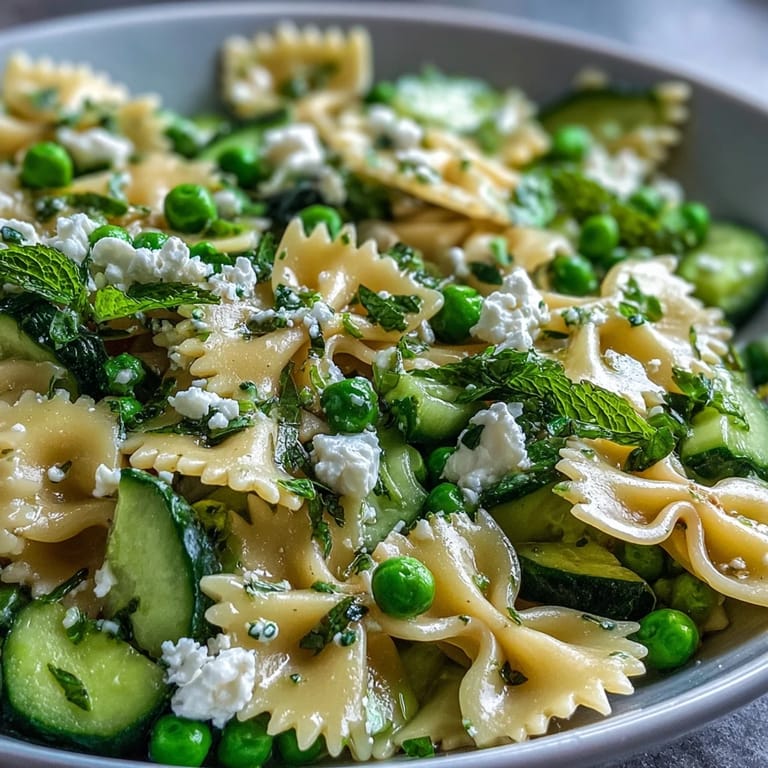
 There's something almost meditative about mixing this salad together, the way the green herbs float through the white pasta like confetti, the sharp lemon smell rising up to meet you. It's the kind of dish that makes you feel like you're doing something good for yourself and anyone you're feeding it to.
When to Make This
Spring and early summer are obvious choices, but I've made this in the dead of winter using frozen peas and greenhouse herbs, and it still lifted the whole meal. The brightness of the lemon and mint works as a small act of resistance against gray, cold days. It's also the dish I reach for when I need something that won't heat up the kitchen, which makes it perfect for warm weather entertaining or lazy weeknight dinners when you don't want to stand over the stove.
How to Make It Your Own
This salad is honestly a framework more than a fixed recipe, and it rewards tinkering. I've added grilled chicken when I needed more substance, swapped in snap peas or edamame for the regular peas, and once threw in some radish slices for a peppery crunch. For a vegan version, just skip the feta or use a plant-based cheese alternative, and the salad loses nothing. The core of it—pasta, bright vinaigrette, fresh herbs—stays true no matter what you do.
Storage and Serving Thoughts
This salad keeps beautifully in the fridge for a couple of days, which makes it ideal for meal prep or bringing to events. If you're making it ahead, hold back the feta until you're ready to serve so it doesn't get soft and absorbed. If the salad seems dry when you pull it out of the fridge, just whisk together a tiny bit more lemon juice and olive oil and toss it through.
- Make it the morning of a picnic so the flavors meld but the vegetables stay crisp.
- Pack the feta separately if you're transporting it, then add it right before eating.
- This is one of those rare salads that actually tastes better the next day once the pasta has absorbed more of the vinaigrette.
 Save to Pinterest
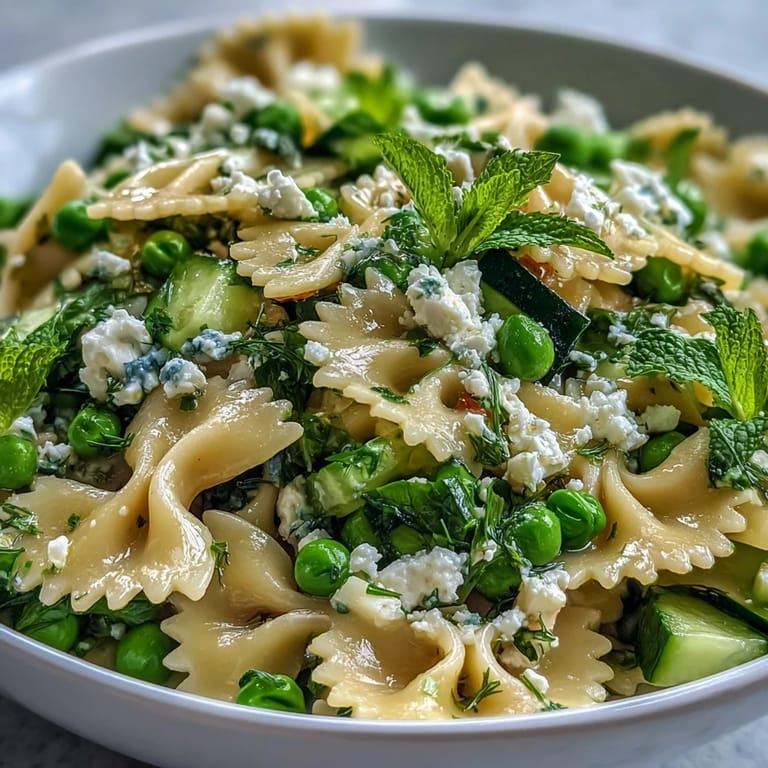
 This salad became my answer to the question 'what should we bring' because it's honest, it's kind to other foods on the table, and somehow it tastes like springtime even when you're using frozen peas in February. Make it once and you'll understand why.
Recipe FAQ
- → How do I keep the peas bright and tender?
Add peas in the last two minutes of pasta cooking, then immediately rinse with cold water to stop cooking and preserve their vibrant color and texture.
- → Can I substitute the feta cheese?
Yes, omit it for vegan versions or use plant-based cheese alternatives to maintain creaminess without dairy.
- → What types of pasta work best here?
Small shapes like farfalle, orecchiette, or penne hold the ingredients well and allow the vinaigrette to coat evenly.
- → How should I store leftovers?
Keep the salad refrigerated in an airtight container for up to two days to maintain freshness and flavor.
- → Can the vinaigrette be prepared in advance?
Yes, the lemon vinaigrette can be whisked together ahead of time and added just before serving for optimal taste.