 Save to Pinterest
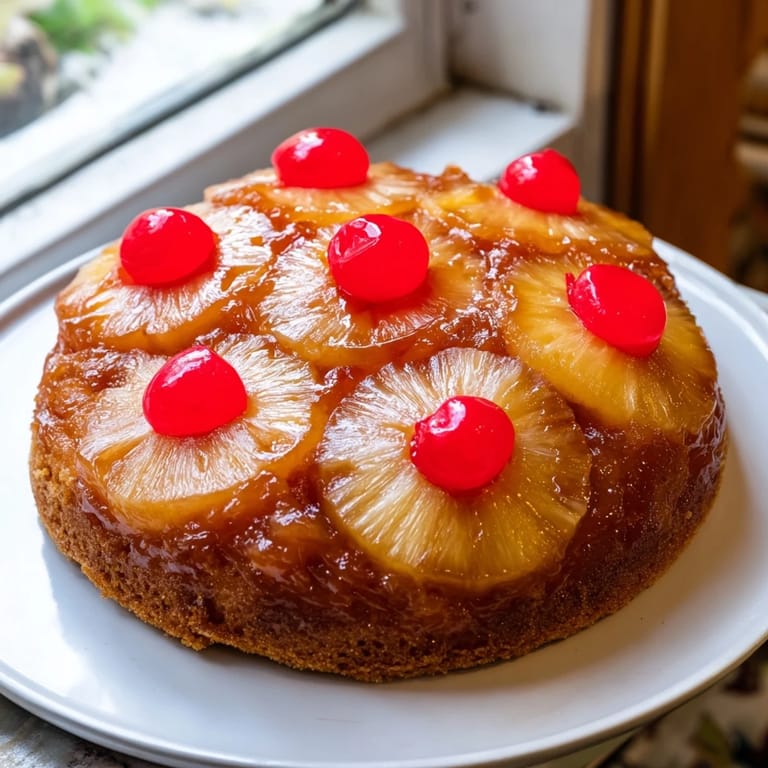
 My grandmother's kitchen smelled like caramelized sugar and butter on Sunday afternoons, and there was always this magical moment when she'd flip a pineapple upside-down cake onto a plate, revealing golden rings studded with bright cherries like edible jewels. I was maybe seven, standing on a footstool to watch, fascinated by how something baked upside down could turn out right-side up and look so perfect. She'd let me place the cherries in each pineapple ring, and I felt like I was arranging treasure. That cake became my measure of home cooking—not fancy, but undeniably beautiful and tasting like butter and comfort.
I made this for a potluck once where everyone brought store-bought desserts, and I remember the silence when I placed this cake on the table, the afternoon light catching those glossy pineapple rings. Someone asked if I'd bought it, and honestly, the relief I felt admitting I'd baked it was almost as good as eating it. That's when I realized this cake had a quiet confidence about it—no apology needed.
Ingredients
- Unsalted butter (for topping): Use real butter for the caramel base; it creates that rich, nutty brown sugar syrup that makes this cake worth eating.
- Light brown sugar: Don't skip the brown sugar for caramel—white sugar won't give you that molasses depth and color.
- Canned pineapple rings: Fresh works if you drain it well, but canned holds its shape and juices perfectly; the syrup they're packed in is liquid gold for brushing on afterward.
- Maraschino cherries: Pick good ones with flavor, or substitute with candied cherries or pecans if you prefer.
- Unsalted butter (for batter): Softened butter incorporates air as you cream it, making the cake tender and light.
- Granulated sugar: This sweetens the cake itself without overpowering the caramel topping.
- Eggs: Room temperature eggs mix smoother and create a more stable, fluffy batter.
- Vanilla extract: A full teaspoon gives warmth without making the cake taste like a vanilla bottle.
- All-purpose flour: Measure by spooning and leveling, never scooping straight from the bag, which compacts and adds too much flour.
- Baking powder: This is your lift; measure carefully and don't use old baking powder from the back of your pantry.
- Salt: A tiny pinch brightens everything and tames sweetness.
- Whole milk: The liquid keeps the cake moist and tender without making it dense.
Tired of Takeout? 🥡
Get 10 meals you can make faster than delivery arrives. Seriously.
One email. No spam. Unsubscribe anytime.
Instructions
- Heat the oven and prepare:
- Preheat your oven to 175°C (350°F) and grease your 23-cm round pan well—this matters because the caramel will stick if you miss a spot. Have all your ingredients nearby before you start; this cake moves quickly once you begin.
- Build the caramel base:
- Melt 60 g butter in the pan (you can do this right in the oven for five minutes or on the stovetop) and pour it evenly into the bottom. Sprinkle brown sugar over it in an even layer, pressing gently so it settles into the butter.
- Arrange your topping:
- Lay pineapple rings flat over the sugar mixture with their holes facing up, fitting them together like a puzzle. Tuck a cherry into the center of each ring.
- Cream the butter and sugar:
- In a mixing bowl, beat softened butter and granulated sugar together for two to three minutes until it's pale, fluffy, and looks almost fluffy like buttercream. This is where air enters the cake.
- Add eggs and vanilla:
- Beat in eggs one at a time, letting each fully mix before adding the next. Add vanilla extract and beat until smooth.
- Combine dry ingredients:
- In another bowl, whisk together flour, baking powder, and salt—this distributes the leavening evenly and catches any lumps in the flour.
- Alternate wet and dry:
- Add the flour mixture to the butter mixture in three additions, alternating with milk and beginning and ending with flour. Stir just until combined; overmixing toughens the cake.
- Spread over pineapple:
- Spoon the batter gently over the pineapple rings and smooth the top with a spatula, being careful not to disturb the fruit beneath.
- Bake to golden:
- Bake for 38 to 42 minutes, until a toothpick inserted into the center comes out clean and the edges are golden brown. The cake should smell nutty and sweet.
- Cool and invert:
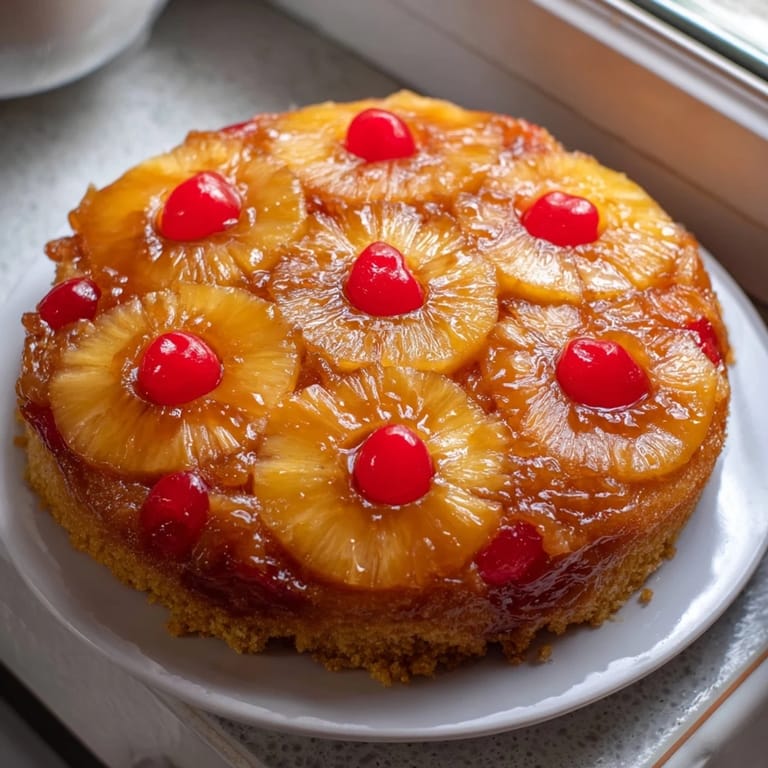
- Let the cake rest in the pan for exactly ten minutes—this lets the caramel set slightly but not harden completely. Run a thin knife around the edges, place a serving plate over the pan, and flip with confidence; the caramel should flow like a glaze over the top.
 Save to Pinterest
 I've made this cake enough times now that I can tell when it's done by smell alone, and there's something ritualistic about that moment of flipping it, that small prayer that the caramel sticks to the cake and not the pan. When it works, when it slides onto the plate with those rings intact and gleaming, I feel like I've pulled off something minor but perfect.
Why This Cake Endures
Pineapple upside-down cake belongs to a quieter era of American cooking, when dessert was about restraint and technique rather than trends. The genius is simple: butter, sugar, fruit, and patience, combined so that every element supports the others. It's the kind of recipe that works every time because the method has been refined by decades of home bakers, each one tweaking nothing because there's nothing to improve.
Serving and Storage
This cake tastes best warm or at room temperature, served with softly whipped cream or vanilla ice cream that melts into the caramel. It keeps well covered at room temperature for two days, and actually improves slightly as the caramel soaks into the cake, making it more moist. You can even freeze it for up to a month, wrapped well, and thaw it before serving.
Small Variations That Matter
If you want to push this cake slightly beyond classic, there are gentle adjustments worth exploring. Brush a tablespoon or two of the pineapple juice from the can into the batter for deeper fruit flavor, or add a tiny pinch of nutmeg to the dry ingredients for warmth. Some bakers toast the brown sugar with the butter before adding it to the pan, which deepens the caramel almost into toffee.
- Substitute the cherries with candied ginger, pecans, or even toasted walnuts for texture and a savory note.
- Fresh pineapple works but must be patted very dry, as extra moisture can make the caramel weep.
- Serve with a drizzle of the reserved pineapple syrup mixed with a tablespoon of butter for an extra glossy finish.
 Save to Pinterest
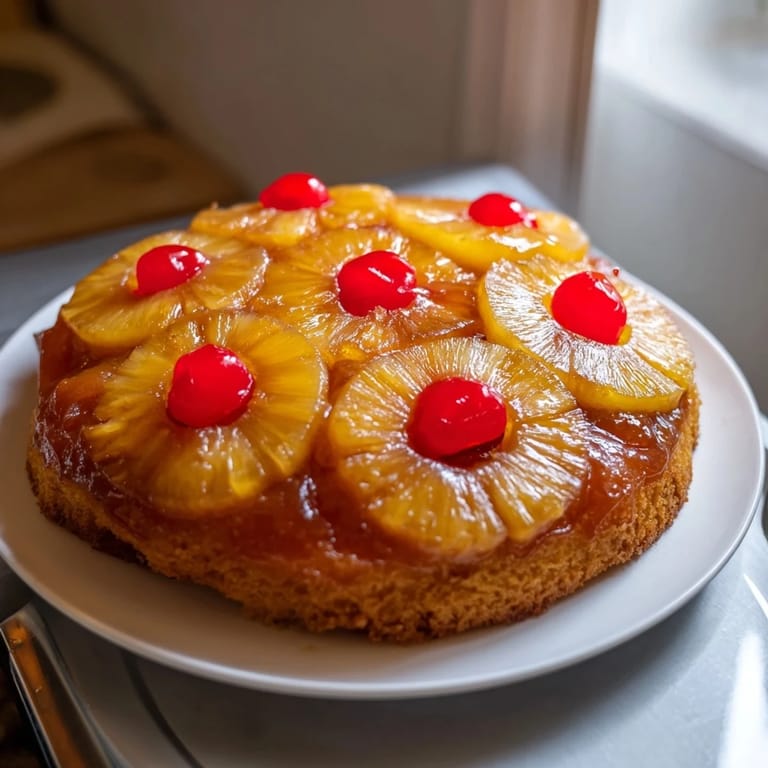
 This is the kind of cake that reminds you why baking exists—not to impress with complexity, but to deliver comfort and beauty in equal measure. Make it once and it becomes part of your repertoire forever.
Recipe FAQ
- → How do I achieve a glossy pineapple topping?
Melted butter combined with brown sugar creates a caramel base. Arranging pineapple rings over this mixture before baking ensures a shiny, sweet topping once inverted.
- → Can fresh pineapple be used instead of canned?
Yes, fresh pineapple can be substituted for canned rings. Be sure to drain well and consider lightly caramelizing them before layering to enhance flavor.
- → What kind of pans work best for this cake?
A greased 9-inch round cake pan is ideal to allow even baking and easy inversion after cooking.
- → Any tips to keep the cake moist?
Alternating the flour additions with milk and avoiding overmixing helps keep the batter tender and the final crumb moist.
- → How long should the cake cool before inverting?
Let the cake rest in the pan for about 10 minutes before running a knife around the edges and carefully flipping to reveal the topping.