 Save to Pinterest
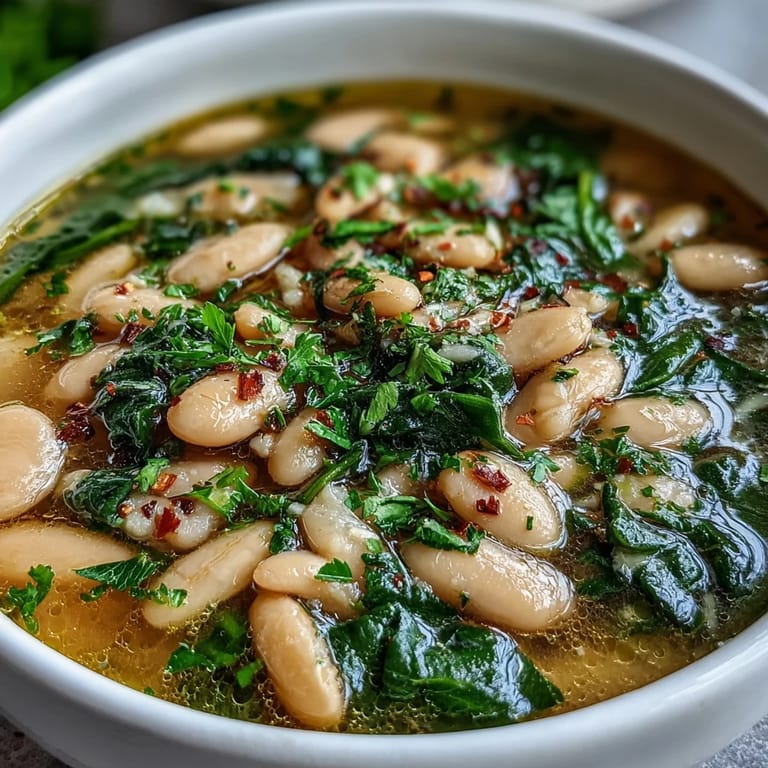
 My neighbor Marco once handed me a mason jar of beans from his garden, insisting I needed to make something "proper" with them. That afternoon, I found myself stirring a pot of what would become this Tuscan soup, the smell of rosemary and thyme filling my kitchen in a way that felt like an apology for every rushed meal I'd eaten that week. The spinach went in last, turning the whole thing a brilliant shade of green, and somehow that simple gesture of a jar of beans became the reason I started cooking Italian soups on purpose.
I made this for my sister during a particularly gray November when she was going through something difficult, and she sat at my kitchen counter with a bowl cradled in both hands like it was the only warm thing in the world. She came back the next week asking for the recipe, which meant more than she probably knew, because cooking for someone in that state feels less like feeding and more like saying you're here.
Ingredients
- Olive oil: Use a decent one you'd actually taste on bread—it's why this soup tastes alive and not just edible.
- Yellow onion, carrots, and celery: This trio is the backbone of nearly every Italian soup I've learned, and they work because they build flavor slowly without overpowering everything else.
- Garlic cloves: Mince them fine so they dissolve into the broth rather than sitting there as little chewy bits.
- Fresh baby spinach: The tenderness matters—it wilts in seconds and turns an almost neon green, which is your sign that all the good stuff is still there.
- Cannellini beans: Drain and rinse them under cold water to wash away that starchy liquid that makes soup feel heavy.
- Low-sodium vegetable broth: Low-sodium matters because you're going to taste every herb and you don't want salt competing for attention.
- Dried thyme and rosemary: Don't skip the dried herbs even if fresh seems fancier—dried herbs bloom differently in a hot broth and taste more intentional here.
- Bay leaf: It softens the whole thing without announcing itself, kind of like how good background music makes a moment feel complete.
- Red pepper flakes: Optional but it's worth adding even a small pinch—it wakes everything up without making it spicy.
- Fresh parsley and lemon: These finish the soup and taste like you remembered what brightness is supposed to feel like.
Tired of Takeout? 🥡
Get 10 meals you can make faster than delivery arrives. Seriously.
One email. No spam. Unsubscribe anytime.
Instructions
- Start your aromatic base:
- Pour olive oil into your pot and let it warm until it smells fragrant and a piece of onion sizzles immediately when it hits the pan. Dice your onion, carrots, and celery into pieces roughly the size of chickpeas so they soften evenly and nothing steals the show.
- Build the flavor foundation:
- Sauté the vegetables for 6 to 7 minutes, stirring now and then, until the onion turns translucent and the carrots start looking a little more tender than raw. You'll know it's right when the kitchen smells sweet and warm rather than sharp and onion-forward.
- Welcome the garlic:
- Add your minced garlic and let it cook for exactly one minute—long enough to release its aroma but not so long that it browns and becomes bitter.
- Bring everything together:
- Dump in your drained beans, broth, and all your herbs at once, then bring the whole thing to a gentle simmer. You want bubbles breaking the surface steadily but not aggressively, like it's breathing rather than boiling.
- Let time do the work:
- Simmer uncovered for 20 minutes, stirring occasionally, which gives the herbs time to soften and every component time to actually know each other.
- Thicken with intention:
- Fish out the bay leaf, then use a potato masher or the back of your spoon to gently crush maybe a quarter of the beans against the side of the pot. This releases their starch and makes the broth creamy without adding anything artificial.
- Finish with green:
- Stir in your chopped spinach and watch it wilt within 2 to 3 minutes—it should look bright green and tender, never dull or mushy.
- Taste and trust yourself:
- Take a spoonful, let it cool slightly, and adjust salt and pepper as needed. Sometimes it needs more thyme, sometimes just more salt—your palate knows.
 Save to Pinterest
 There's something about a soup that costs almost nothing to make but feels generous to eat, and this one taught me that lesson early. It was the kind of dish that made me stop thinking of cooking as something performed for other people and start thinking of it as something that could belong to regular Tuesday nights.
The Art of Mashing Without Overdoing It
The mashing step confused me for years until I realized I was trying to make the soup into something it wasn't supposed to be. You're not making a purée—you're just releasing enough starch to make the broth feel silky without turning everything into paste. Use a gentle hand, crush only what falls apart easily, and stop before you feel like you've accomplished something visible. The best texture is the one you don't think about, the one that just feels right on your tongue.
Customizing Without Losing the Soul
This soup is genuinely flexible in a way that doesn't feel like compromise. I've added diced zucchini in summer, swapped the spinach for kale when I was out of fresh greens, and once threw in some diced potatoes when someone said they wanted something more substantial. Each version tasted like itself while still tasting like home, which is probably the whole point of rustic cooking anyway.
Serving Moments That Matter
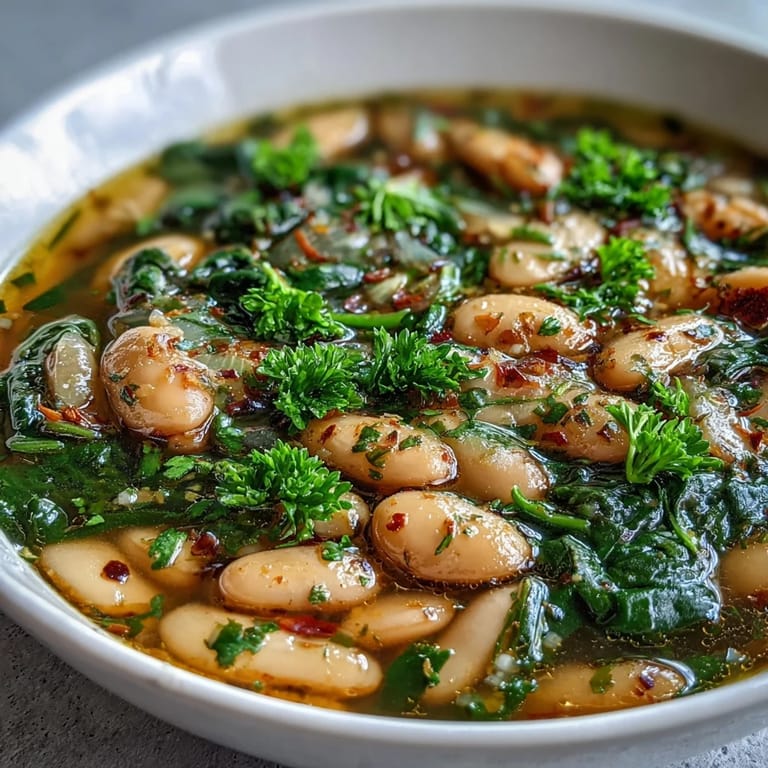
This soup tastes better in a wide bowl than a tall one because you can actually taste all the layers at once, and it stays hot longer without being aggressively steaming at your face. Serve it with crusty bread for soaking or on its own with a squeeze of lemon wedge that makes the herbs suddenly taste brighter.
- A squeeze of fresh lemon juice doesn't just add acid—it makes you taste the rosemary and thyme in a completely different way.
- If you're feeding non-vegans, pass around grated Parmesan and let everyone make their own choice about how much they want.
- This soup is actually better the next day when the flavors have had time to stop introducing themselves and start actually talking to each other.
 Save to Pinterest
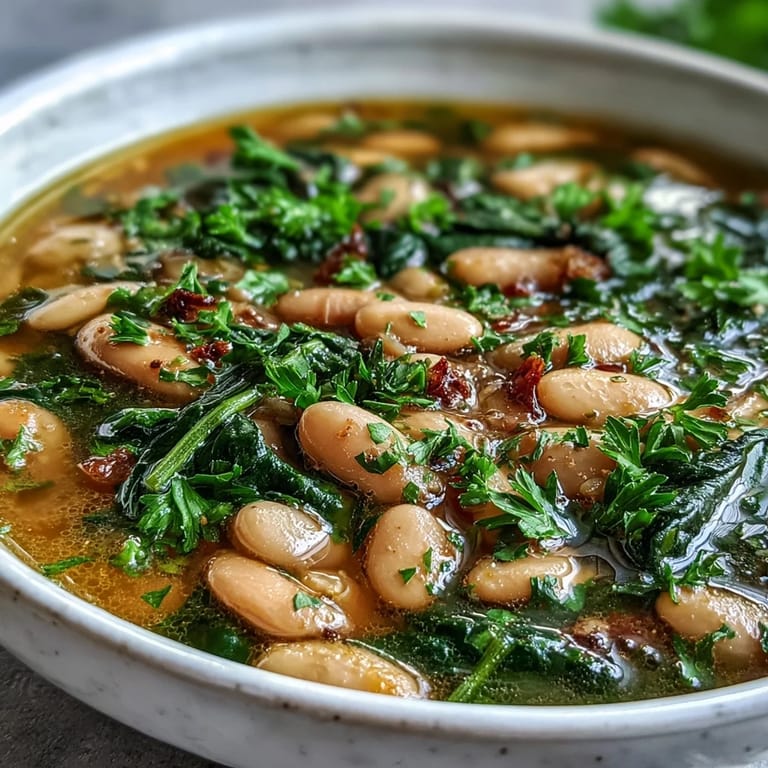
 This soup reminds me that the best meals are often the ones that ask the least of you while giving back the most. It's the kind of recipe that becomes yours the moment you make it the first time.
Recipe FAQ
- → What beans are used in this dish?
Cannellini beans provide a creamy texture and mild flavor that pairs well with the spinach and herbs.
- → Can I use fresh herbs instead of dried?
Yes, fresh thyme and rosemary can be used; add them towards the end of cooking for the best flavor.
- → How can I make the broth richer?
Blending a portion of the soup creates a thicker, creamier texture without adding dairy.
- → Is this dish suitable for vegan diets?
Yes, it contains no animal products and is naturally vegan.
- → What are some good serving suggestions?
Serve with crusty bread or gluten-free rolls for a complete, satisfying meal.
- → Can I add other vegetables to this dish?
Diced potatoes or zucchini can be added during cooking for extra heartiness and flavor.