 Save to Pinterest
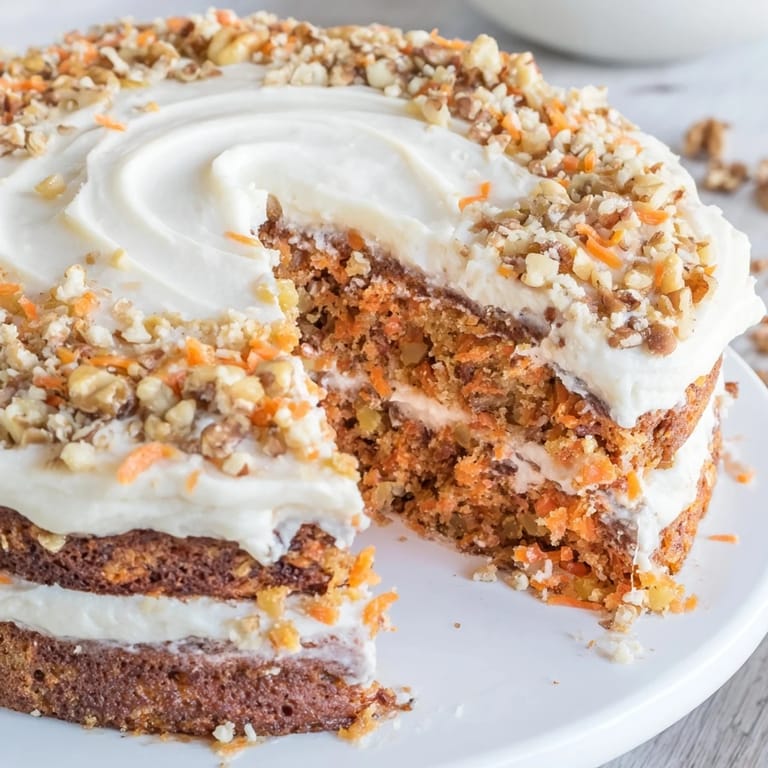
 My aunt showed up to a family dinner with this carrot cake years ago, and I watched people's faces light up the moment they tasted it—the spices hit first, then came this unexpected sweetness from the pineapple. She refused to share the recipe for the longest time, which only made me more determined to figure it out. When she finally relented, I realized the magic wasn't some secret ingredient, just the willingness to let the cake sit properly and frost it while still slightly warm. Now I make it whenever I need to remind myself that sometimes the most loved dishes are the ones that feel a little bit like home.
I made this for a potluck once and someone actually asked for seconds before dessert was officially served—they just couldn't wait. That's when I knew the recipe was solid. There's something about serving a homemade cake that makes people pause and actually enjoy it instead of just eating.
Ingredients
- All-purpose flour: The base that holds everything together; make sure it's fresh and not clumpy.
- Ground cinnamon, nutmeg, and ginger: These three spices are what make carrot cake unmistakably carrot cake—don't skip any of them or measure them too lightly.
- Baking powder and baking soda: They work together to give the cake lift and a tender crumb; use both, not one or the other.
- Granulated and brown sugar: The combination creates depth and moisture that keeps the cake soft for days.
- Vegetable oil: Oil makes the cake stay moist longer than butter would; don't substitute with melted butter or you'll change the texture.
- Eggs: Add them one at a time so they incorporate fully and create a stable batter that won't deflate.
- Grated carrots: Use fresh carrots, grate them yourself, and don't pack them down in the measuring cup—you want the lightest, airiest amount.
- Walnuts or pecans: Toast them if you have time; it makes them taste toastier and more complex.
- Crushed pineapple: Drain it thoroughly in a fine-mesh strainer for at least five minutes, pressing gently to remove excess liquid that would make the cake soggy.
- Cream cheese: Soften it at room temperature for at least an hour so it blends smoothly into the frosting without lumps.
- Unsalted butter: Also softened, it should feel like butter you can easily push your finger through.
- Powdered sugar: Sift it first to break up any clumps, then add gradually while beating so the frosting doesn't seize.
Tired of Takeout? 🥡
Get 10 meals you can make faster than delivery arrives. Seriously.
One email. No spam. Unsubscribe anytime.
Instructions
- Set the stage:
- Preheat your oven to 350°F and grease those cake pans as if you mean it—use butter, cocoa powder, or oil, then a light dust of flour so nothing sticks. If you have parchment paper, cut circles for the bottoms; it's a small step that saves heartache.
- Build the dry foundation:
- Whisk flour, cinnamon, nutmeg, ginger, baking powder, baking soda, and salt together in a large bowl. Use a whisk and make sure there are no streaks of baking soda anywhere—you want everything evenly distributed.
- Cream the sugars and oil:
- Beat granulated sugar, brown sugar, and oil together until the mixture looks a little glossy and the sugar starts to dissolve. This takes about two minutes with an electric mixer and builds the foundation for everything that comes next.
- Add eggs one at a time:
- Drop in one egg, beat well, then repeat until all four are incorporated. You'll notice the mixture gets lighter and airier each time—that's exactly what you want.
- Stir in vanilla:
- A couple teaspoons of vanilla extract goes in now and gets mixed just until you can't see it anymore.
- Fold in the dry mixture:
- Pour the dry ingredients into the wet mixture slowly, stirring with a spatula or wooden spoon just until you can't see any white flour streaks. Don't overmix or the cake will be tough and dense instead of tender.
- Add the good stuff:
- Gently fold in the grated carrots, chopped nuts, drained pineapple, and raisins if you're using them. Use a spatula and be gentle—you're not whipping this, just folding everything until distributed.
- Bake with patience:
- Divide the batter evenly between your prepared pans and smooth the tops. Bake for 35 to 40 minutes until a toothpick inserted in the center comes out clean or with just a few moist crumbs.
- Cool properly:
- Let the cakes sit in their pans for 10 minutes—this matters because the structure is still setting. Then turn them out onto a wire rack to cool all the way through, which takes at least an hour.
- Make the frosting:
- Beat softened cream cheese and butter together until smooth and no lumps remain. Then add powdered sugar a little at a time while beating, then vanilla and salt, until the frosting is light, fluffy, and spreadable.
- Frost and finish:
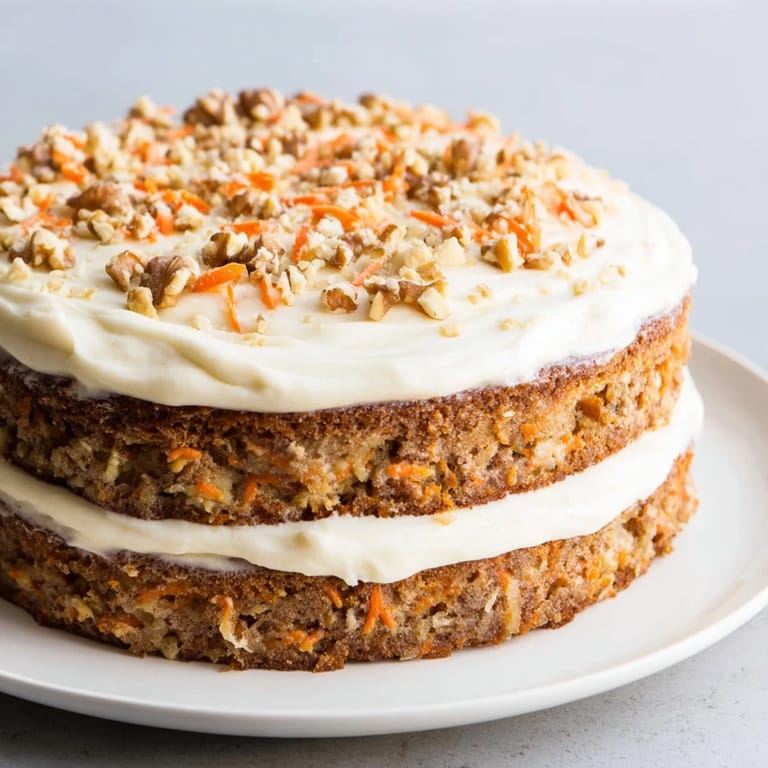
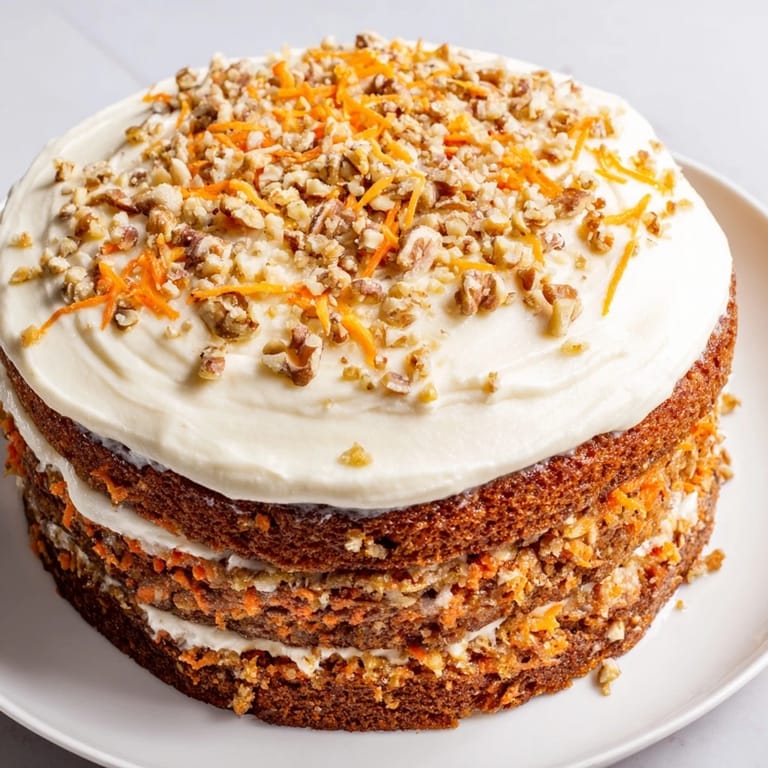
- Once the cakes are completely cool, spread frosting between the layers, then over the top and sides. Garnish with extra nuts or a light dusting of grated carrot if you want to show off.
 Save to Pinterest
 The first time someone told me my carrot cake reminded them of their grandmother's version, I realized the recipe had become more than just technique and measurements. It's about creating a moment where people slow down and remember why cake matters.
Why This Cake Works
The secret to keeping this cake moist is the combination of oil and the moisture from the carrots and pineapple—they work together so the cake stays tender even after a day or two in the fridge. The spices aren't there to overwhelm; they're there to remind you of warmth and home. Every element in this cake has a job, and none of them are there just for show.
Storage and Serving
This cake actually gets better as it sits because the flavors have time to meld and the moisture redistributes. Store it covered in the refrigerator for up to five days, and bring it to room temperature for about 15 minutes before serving if you want the frosting to feel soft and smooth on your tongue. It pairs beautifully with hot tea, coffee, or even a dessert wine if you're feeling a little fancy.
Making It Your Own
Once you understand how this cake works, you can play with it without breaking it. Toast your nuts first if you have time—it deepens their flavor and makes them taste less like an afterthought. Some people swear by pecans, others by walnuts; use what you love. The raisins are optional, but they add little pockets of chewiness that some people go crazy for.
- If you skip the nuts, the cake is still delicious—don't feel obligated to use them just because the recipe says so.
- A splash of rum or bourbon in the frosting changes everything if you're making it for adults only.
- Make cupcakes instead of a layer cake and frost them individually for parties where you want something easy to serve.
 Save to Pinterest
 This carrot cake has a way of turning an ordinary Tuesday into something worth remembering. Bake it when you need to give someone a hug that tastes like spice and cream cheese.
Recipe FAQ
- → What spices are used in this carrot cake?
The cake features ground cinnamon, nutmeg, and ginger which add warm, aromatic flavors complementing the carrots.
- → Can I substitute nuts in the batter?
Yes, you can swap walnuts for pecans or omit nuts entirely for a nut-free version, ensuring no cross-contamination.
- → How do I ensure the cake stays moist?
Incorporating grated carrots and pineapple contributes moisture, while careful mixing and proper baking time help maintain a tender texture.
- → What is the best way to frost the cake?
Beat softened cream cheese and butter until smooth, then gradually add powdered sugar and vanilla. Spread evenly between layers and over the top and sides.
- → How long can I store the cake?
Keep the cake covered in the refrigerator for up to five days to preserve freshness and flavor.