 Save to Pinterest
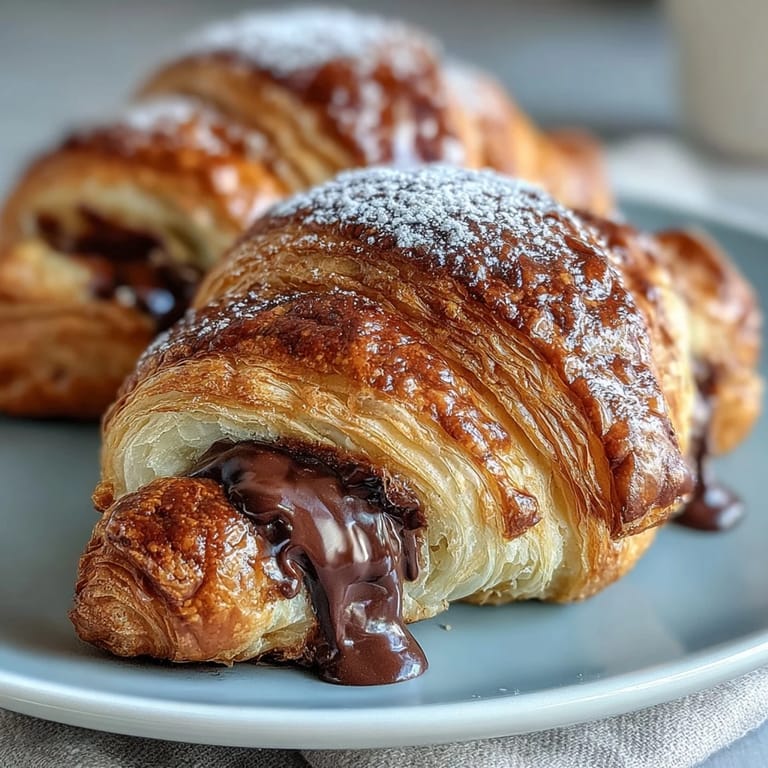
 There's a particular morning I won't forget—standing in my kitchen with flour dust settling on everything, watching laminated dough reveal those perfect butter layers for the first time. My sourdough starter had been bubbling away quietly in the fridge, and I'd been curious about pushing it beyond bread into something more ambitious. Dark chocolate croissants felt impossible until I actually started, then suddenly the kitchen smelled like butter, fermentation, and promise all at once.
I made these for a friend who'd been skeptical about my baking experiments, and watching their face when they bit through the crisp exterior into that molten chocolate center made the 13 hours of patience feel like nothing. They asked for the recipe that same afternoon, which I think says everything about how these taste.
Ingredients
- Bread flour (500 g): The higher protein content builds structure that holds those beautiful laminated layers without tearing during folds.
- Active sourdough starter (100 g): Use starter that's freshly fed and bubbly—it brings tangy complexity and helps develop flavor during the long fermentation.
- Cold whole milk (220 ml): Cold liquid slows down fermentation slightly, giving you better control over timing and more developed flavor.
- Granulated sugar (60 g): Just enough to feed the yeast and add subtle sweetness without overshadowing the sourdough tang.
- Fine sea salt (10 g): Strengthens the dough and balances the richness of the butter and chocolate beautifully.
- Unsalted butter (30 g for dough, 250 g for laminating): European-style butter has higher fat content, which means better lamination and more flaky layers—worth seeking out.
- Large egg (1): Beaten with water, this creates that shiny, golden-brown finish you're after.
- High-quality dark chocolate (120 g): Cocoa content of 60% or higher keeps things sophisticated; cheaper chocolate will taste waxy compared to the buttery dough.
Tired of Takeout? 🥡
Get 10 meals you can make faster than delivery arrives. Seriously.
One email. No spam. Unsubscribe anytime.
Instructions
- Make the Dough:
- Combine flour, sourdough starter, cold milk, sugar, salt, and softened butter in a large bowl or stand mixer, mixing until a rough dough forms. Knead for 4–5 minutes until smooth and slightly elastic, then cover and rest at room temperature for 30 minutes while the gluten relaxes.
- Bulk Fermentation:
- Place dough in a lightly oiled bowl, cover loosely, and let it bulk ferment at room temperature for 2–3 hours, performing 2 stretch-and-folds at 1-hour intervals to build strength. Transfer to the fridge and chill overnight (8–12 hours), which develops flavor and makes lamination much easier.
- Prepare the Butter Block:
- Place cold butter between two sheets of parchment paper and pound and roll it into a 20 x 20 cm square, then refrigerate until firm and pliable but not hard. This step matters because butter that's too cold will shatter during lamination, and butter that's too warm will merge into the dough instead of creating distinct layers.
- Laminate the Dough:
- Roll your chilled dough into a 30 x 30 cm square on a lightly floured surface, place the butter block in the center, and fold the dough over to fully encase it. Roll out to a 60 x 20 cm rectangle, fold into thirds like a letter, chill for 30 minutes, then repeat this rolling-and-folding process two more times, chilling between each turn—this creates those signature flaky layers.
- Shape Croissants:
- Roll the final laminated dough out to a 60 x 30 cm rectangle about 4 mm thick, then cut into 12 long triangles with a 10 cm base. Place a chocolate baton at the wide end of each triangle and roll tightly toward the tip, then place seam-side down on parchment-lined baking sheets.
- Final Proof:
- Cover croissants loosely and proof at room temperature for 4–5 hours until doubled and visibly puffy, or proof in a slightly warm, draft-free spot if your kitchen runs cool. You'll know they're ready when they jiggle slightly when you gently shake the baking sheet.
- Bake:
- Preheat your oven to 200°C (400°F), beat an egg with 1 tablespoon water, and gently brush the croissants for that gorgeous shine. Bake for 18–22 minutes until deep golden brown and crisp, watching them toward the end to catch them at peak color.
- Cool:
- Transfer to a wire rack and let rest for at least 15 minutes before serving, which lets the chocolate set slightly and makes them easier to handle.
 Save to Pinterest
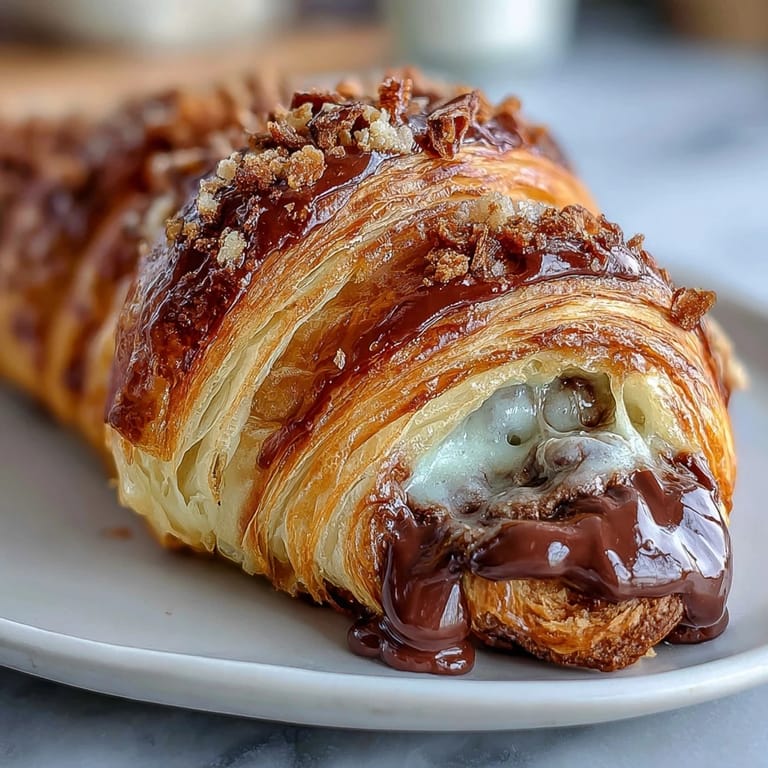
 There's a moment during the final proof when you realize these aren't just pastries anymore—they're the reward for patience and intention, proof that combining humble ingredients with time creates something genuinely magical. Sharing them warm with someone you care about feels like the whole point.
Why Sourdough Changes Everything
Adding sourdough starter to croissant dough sounds unconventional, but it adds a subtle tangy complexity that plays beautifully against the richness of the chocolate and butter. The fermentation also strengthens the gluten naturally, which means the laminated layers hold their structure better during baking. I've made these with commercial yeast before, and while they turned out fine, they tasted flatter and needed the chocolate to carry all the flavor.
Lamination Feels Harder Than It Actually Is
The first time I laminated dough, I thought I'd destroyed it halfway through—there were little spots where butter peeked through, and I was convinced the whole thing was ruined. Then I read that small visible spots of butter are actually normal and make the layers more pronounced. The real secret is keeping everything cold, not rushing the folds, and trusting that the process works even when it looks imperfect in the moment.
Making These Your Own
Once you've mastered the base technique, these croissants become a canvas for experimentation. I've made versions with orange zest folded into the dough, which pairs beautifully with dark chocolate, and others with a light sprinkle of flaky sea salt before baking that adds an unexpected salty-sweet dimension. The filling doesn't have to be chocolate either—try almond paste, dried apricots, or even a thin smear of quality jam, though dark chocolate remains my favorite for how it melts into every layer.
- For extra flavor and visual appeal, add a pinch of orange zest to the dough or sprinkle croissants with flaky sea salt just before baking.
- These taste best the day they're baked, but gently reheating in a 160°C oven for 5 minutes restores that crispy exterior and warm chocolate.
- Make sure your chocolate is cut into even batons so each croissant has the same amount, and cold chocolate works better than room-temperature since it won't bleed into the dough during shaping.
 Save to Pinterest
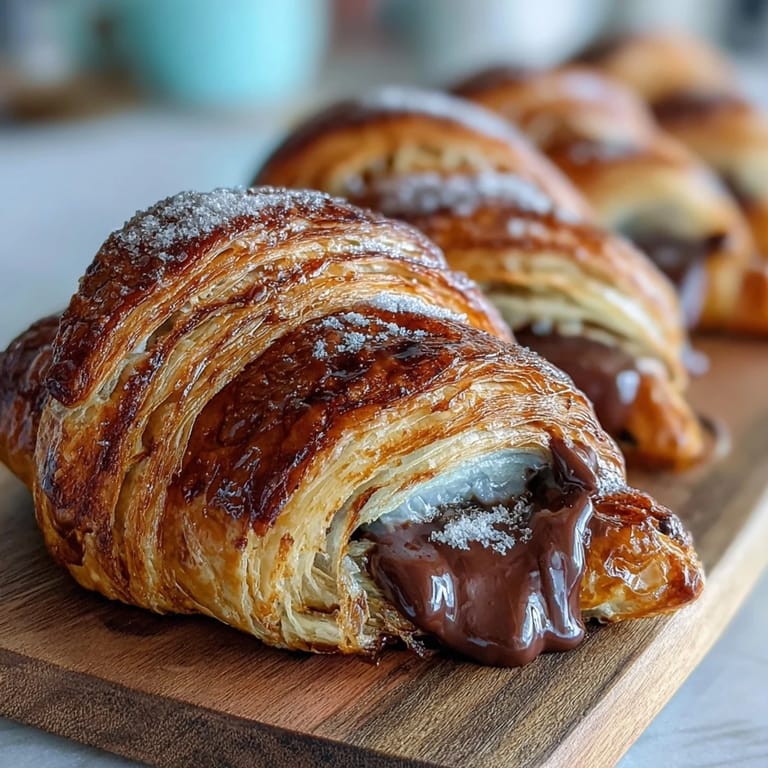
 These croissants represent the sweet spot between the tangy comfort of sourdough and the indulgent luxury of pastry—they're challenging enough to feel accomplished when they work, but straightforward enough that you'll want to make them again. Once you've done it once, you'll understand why people queue outside French bakeries for these.
Recipe FAQ
- → What is the purpose of lamination in sourdough croissants?
Lamination involves folding cold butter into the dough multiple times to create alternating layers, resulting in a flaky, layered texture when baked.
- → How does the sourdough starter affect the croissant dough?
The starter adds natural fermentation, enhancing flavor complexity and contributing to the dough's tenderness and rise.
- → Why is chilling important during preparation?
Chilling firms the butter layers and relaxes the dough, making it easier to roll out and preventing butter from melting into the dough.
- → Can I use other types of chocolate for the filling?
Yes, any high-quality chocolate with good cocoa content works well, though dark chocolate provides a rich contrast to the buttery dough.
- → What is the ideal proofing environment for these croissants?
A warm, draft-free place helps the dough rise properly, resulting in light, airy pastries with a tender crumb.
- → How should croissants be stored after baking?
Store at room temperature in a sealed container for same-day enjoyment. Reheat gently in the oven to restore crispness.