 Save to Pinterest
 Last October, I stood in my kitchen watching the afternoon light turn everything golden, and I realized I'd been eating the same sad lunch salads all week. That's when I started throwing together whatever autumn produce I'd grabbed at the farmers market—some butternut squash, a handful of Brussels sprouts, a crisp apple—and roasting it all together with farro. One bowl changed how I think about weeknight meals. It felt generous without being fussy, and warm without making me sweat in my own kitchen.
My friend Sarah came over complaining about being stuck in a cooking rut, so I made this for her without any fanfare—just plated it and set it down. She took one bite and got quiet, the way people do when something unexpected hits them. By the end of lunch, she was asking about the spices and whether she could make it with whatever vegetables she had on hand. That's when I knew this recipe had something, that rare quality of being both approachable and thoughtfully put together.
Ingredients
- Butternut squash, peeled and cubed (2 cups): The natural sweetness caramelizes beautifully when roasted, and peeling it raw saves time even if it feels a little aggressive.
- Brussels sprouts, trimmed and halved (2 cups): Those crispy, charred edges are what you're after—don't skip the stirring halfway through roasting.
- Kale, stems removed and leaves chopped (2 cups): The quick wilt in a skillet softens it just enough that it won't feel like you're chewing on your garden.
- Apple, cored and sliced (1 large): A good tart variety like Honeycrisp or Granny Smith keeps the bowl from tasting too heavy, and the caramelized edges add a subtle sweetness.
- Farro, rinsed (1 cup): This grain has a gentle chewiness that holds up better than quinoa in a loaded bowl, though you can swap freely depending on your preference.
- Vegetable broth or water (2 cups): The broth adds subtle flavor, but water works just fine if that's what you have on hand.
- Olive oil (3 tablespoons total): Split between the roasted vegetables and the apples so nothing sticks or dries out.
- Sea salt (1 teaspoon): Taste as you go—you might want less if your broth is already seasoned.
- Black pepper (1/2 teaspoon): A grind of fresh pepper makes a real difference here.
- Smoked paprika (1/2 teaspoon): This is the secret that makes everything taste like autumn without being heavy-handed.
- Ground cinnamon (1/2 teaspoon): Just a whisper on the apples, not enough to taste like dessert.
- Toasted pumpkin seeds (1/4 cup): These add a satisfying crunch and a dose of minerals that make the bowl feel complete.
- Dried cranberries (2 tablespoons): A bit of tang that plays nicely against all the sweetness.
- Feta or vegan cheese (2 tablespoons, crumbled, optional): The salty, creamy element that ties everything together, though it's genuinely optional if you prefer keeping it vegan.
Tired of Takeout? 🥡
Get 10 meals you can make faster than delivery arrives. Seriously.
One email. No spam. Unsubscribe anytime.
Instructions
- Heat your oven and prepare:
- Get your oven to 425°F and line two baking sheets with parchment paper—this small step prevents sticking and cleanup later.
- Season and roast the squash and Brussels sprouts:
- Toss the squash and sprouts with two tablespoons of olive oil, salt, pepper, and smoked paprika, then spread them in a single layer. They'll need the full 25 to 30 minutes, and stirring them once halfway through ensures even caramelization on all sides.
- Prepare and roast the apples:
- Slice your apple, arrange it on the second sheet, drizzle with the remaining tablespoon of oil, and dust with cinnamon. These only need about 15 minutes, so they go in after the vegetables are already working.
- Cook the grain quietly:
- Rinse your farro, bring broth to a boil, then add the grain and reduce heat to low. Cover and let it simmer for 20 to 25 minutes until tender—the whole time you're not thinking about it, which is the point.
- Wilt the kale with intention:
- Heat a skillet over medium heat, add your chopped kale with just a splash of water, and stir for two to three minutes until it softens and darkens. This takes almost no time but transforms the texture entirely.
- Assemble with care:
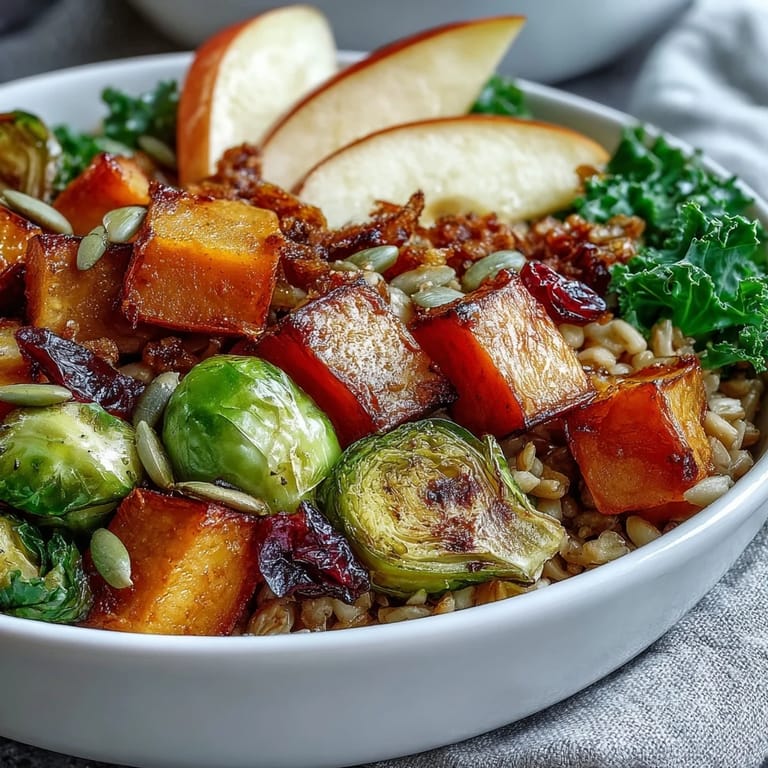
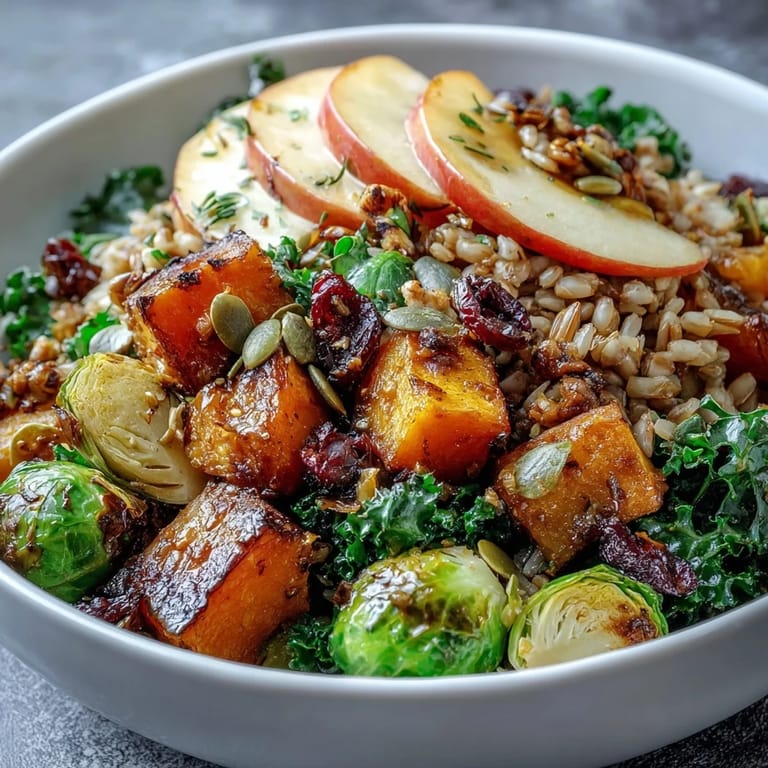
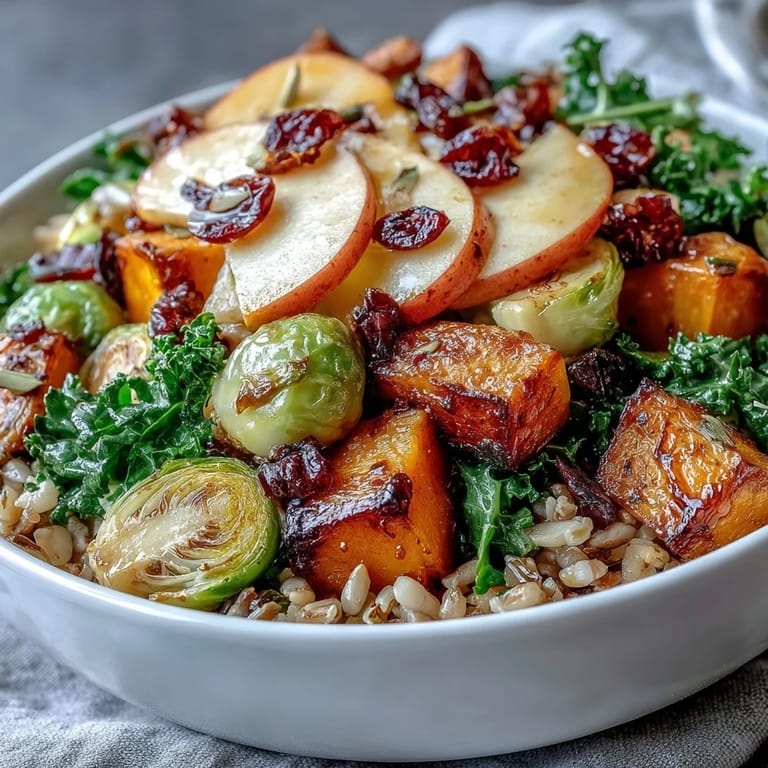
- Divide the cooked farro among four bowls as your base, then arrange the roasted vegetables, wilted kale, and caramelized apples on top in whatever pattern feels right. The bowl is as much about the visual appeal as the taste.
- Finish and serve:
- Scatter pumpkin seeds and dried cranberries across the top, add a crumble of cheese if you're using it, and serve while everything is still warm enough to release a little steam.
 Save to Pinterest
 A few months in, I started bringing this bowl to work and eating it at my desk while my coworker would peer over the divider looking genuinely envious. There's something about a meal that looks this good and tastes this nourishing that makes you feel like you have your life together, even if you're eating it from a plastic container under fluorescent lights. That shift, from feeling like you're depriving yourself to feeling like you're actually taking care of yourself—that's what this bowl does.
The Magic of Roasted Vegetables
Roasting vegetables isn't complicated, but it's where the real flavor happens. The high heat creates those caramelized edges that taste richer and more complex than anything you'd get from steaming or boiling, and the drier environment of the oven concentrates the natural sugars in both the squash and the sprouts. I learned this the hard way after years of thinking roasted vegetables were just a nicer way to serve the same thing, until one day I finally understood the chemistry behind why they tasted so much better.
Building Bowls That Actually Satisfy
There's a rhythm to a good bowl—you want texture, sweetness, earthiness, and a grain to tie it all together. The butternut squash brings natural sweetness, the Brussels sprouts add an earthy depth and those crispy edges, the kale grounds everything with a slight bitterness, and the apple cuts through with brightness and a hint of tartness. The farro acts as an anchor, soaking up flavors while adding substance. Once you understand this formula, you can swap vegetables seasonally and never get bored.
Flexibility and Variations
This recipe thrives on adaptation because the structure is solid enough to hold whatever you have on hand. Winter pears work beautifully instead of apples if that's what's in your fruit bowl, and you can absolutely use quinoa or brown rice if you need to avoid gluten or just prefer a different grain texture. I've added roasted chickpeas for extra protein on days when I'm particularly hungry, or swapped the kale for spinach when that's fresher at the market. The point isn't following the recipe exactly but understanding the principles well enough to trust your own instincts.
- Try pears in place of apples for a softer, more delicate sweetness.
- Add roasted chickpeas or crumbled tofu if you're looking for more substantial protein.
- Swap farro for quinoa or brown rice depending on dietary needs or what you have in the pantry.
 Save to Pinterest
 This bowl became my answer to the question of how to eat well without spending your entire evening in the kitchen, and more importantly, without feeling like you're sacrificing anything. It's the kind of recipe that quietly changes how you think about cooking for yourself.
Recipe FAQ
- → What grains work best in this bowl?
Farro provides a chewy, nutty foundation that pairs beautifully with roasted vegetables. Quinoa offers a lighter protein-rich option, while brown rice adds hearty substance. Each grain absorbs the vegetable broth's savory flavors differently.
- → Can I prepare this bowl ahead for meal prep?
Absolutely. Roast the vegetables and cook the grains in advance, then store separately in airtight containers. Reheat vegetables in the oven to restore their caramelized edges. The kale is best wilted fresh before serving.
- → How do I prevent the apples from becoming mushy?
Roast apples on a separate baking sheet for just 15 minutes—they should be tender but still hold their shape. Use firm varieties like Honeycrisp or Granny Smith that withstand heat well.
- → What protein additions work well?
Roasted chickpeas add satisfying crunch and plant protein. Crispy tofu cubes or pan-seared tempeh also complement the autumn flavors. For non-vegetarian options, shredded rotisserie chicken works nicely.
- → Can I use other seasonal vegetables?
Sweet potatoes, parsnips, or carrots substitute beautifully for squash. Try roasted beets for earthy sweetness, or add cauliflower for extra bulk. The seasoning blend works with most fall vegetables.
- → What's the best way to reheat leftovers?
Spread vegetables on a baking sheet at 375°F for 10-12 minutes to recrisp edges. Warm grains separately with a splash of water or broth. Avoid microwaving, which can make vegetables soggy.